What Does Engine Oil Do? (5 Jobs It Performs + What Happens Without It)
What does engine oil actually do inside your engine? It performs 5 critical jobs simultaneously — and skipping even one oil change starts damage you cannot see or reverse. Here’s what engine oil does, why each function matters, and what actually happens when oil breaks down.
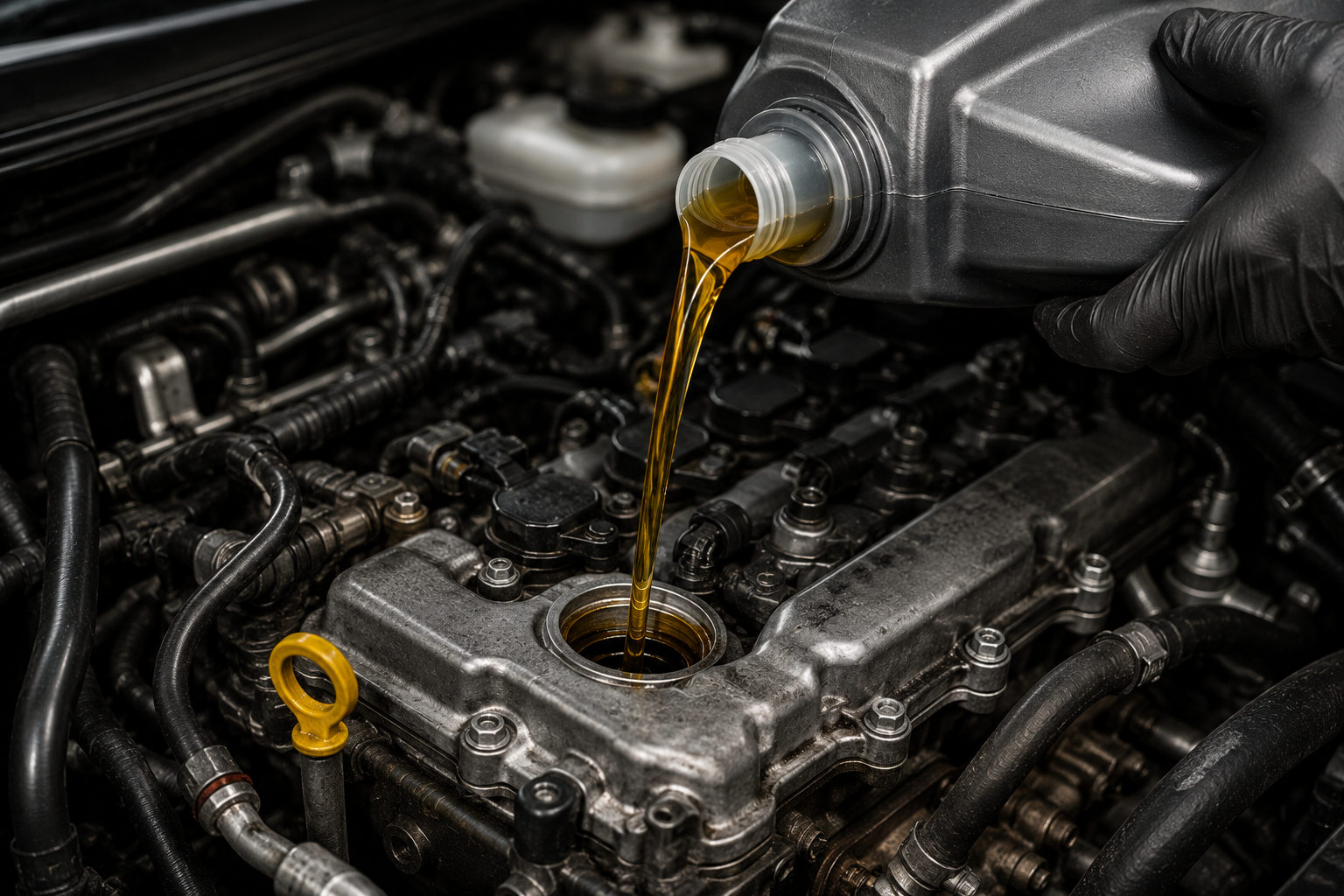
Engine oil performs 5 simultaneous jobs: lubrication (reducing metal-to-metal wear by up to 10,000x), cooling (carrying 40% of engine heat away from pistons and bearings that coolant cannot reach), cleaning (holding contaminants in suspension until the oil change), sealing (filling microscopic gaps between piston rings and cylinder walls), and protecting against corrosion (neutralizing combustion acids). Remove any one of these functions and measurable engine damage begins within minutes.
Most drivers know they need to change engine oil. Fewer understand why — which is exactly why “I’ll do it next month” becomes a $4,000 engine rebuild. The five things engine oil does are not optional maintenance courtesies. They are active, continuous processes happening inside your engine every second it runs. This guide explains each one with the specific numbers behind it and what measurable damage occurs when oil is missing or degraded.
The 5 Jobs Engine Oil Performs — Happening Right Now
Job 1 — Lubrication (The Most Obvious, Most Misunderstood Job)
Metal engine components move against each other at speeds up to 6,000 RPM. Without lubrication, direct metal contact at these speeds generates friction so intense that components weld themselves together within seconds — a condition called engine seizure. Engine oil creates a film between moving surfaces typically 2–10 micrometers thick (thinner than a human hair, which averages 70 micrometers). This hydrodynamic film keeps metal surfaces separated at all times.
The numbers behind this are remarkable. A modern engine bearing experiencing proper hydrodynamic lubrication has a coefficient of friction of approximately 0.001–0.005. Without oil, that same bearing has a friction coefficient of 0.3–0.5 — 100 times higher. That difference translates directly into heat generated, power lost to friction, and wear rate of metal surfaces.
Different engine components require different types of lubrication. Main and rod bearings use hydrodynamic lubrication — the rotating shaft literally floats on a pressurized oil film. Cam lobes and lifters use boundary lubrication — the surfaces do contact each other, and the oil’s anti-wear additives (primarily ZDDP) create a protective sacrificial film on the metal surface that prevents actual metal-to-metal wear. This is why ZDDP concentration in engine oil matters specifically for high-performance and older engines with flat-tappet camshafts.
Job 2 — Cooling (40% of Engine Heat That Coolant Cannot Reach)
Most drivers think the cooling system handles all engine heat management. It handles most — but not all. Your coolant circulates through water jackets surrounding the cylinder bores and combustion chambers. It cannot reach the piston undersides, the connecting rod bearings, the crankshaft main bearings, the camshaft and its lobes, or the valve stems. Engine oil is the only fluid that contacts these surfaces.
Pistons in a modern engine experience temperatures up to 300°C (570°F) at the crown during combustion. The oil squirt jets that spray oil on the underside of pistons drop that temperature by 30–60°C through heat absorption and convection. Without adequate oil, piston temperatures exceed the aluminum alloy’s thermal limits — the piston expands, contacts the cylinder wall, and scoring begins. Heavily turbocharged engines have even more aggressive oil cooling requirements because turbocharger bearings operate at temperatures where they can destroy themselves within minutes of oil starvation.
The heat absorbed by oil is transferred to the oil pan, where air flowing underneath the car dissipates it. High-performance vehicles add dedicated engine oil coolers — essentially small radiators for the oil — because the thermal load exceeds what the pan alone can handle. This is why performance and track-day driving burns through oil quality faster than normal highway driving.
Job 3 — Cleaning (Your Engine’s Internal Housekeeping System)
Every time combustion occurs, byproducts escape past the piston rings into the crankcase — a process called blowby. These byproducts include partially burned fuel, water vapor, carbon particles, and acidic combustion gases. Without a mechanism to deal with this contamination, it accumulates as sludge — the brownish-black paste that blocks oil passages, coats internal surfaces, and eventually causes catastrophic engine damage.
Engine oil contains a detergent and dispersant additive package specifically engineered to handle these contaminants. Detergents (typically metallic compounds — calcium, magnesium, or sodium sulfonates) neutralize acids and keep combustion deposits from sticking to metal surfaces. Dispersants (typically polyisobutylene succinimides or succinamides) hold insoluble particles — carbon, metal wear particles, oxidized oil — in suspension within the oil rather than allowing them to settle and accumulate.
This cleaning function is why used engine oil turns black. The oil is not failing — it is doing exactly what it should, holding contamination in suspension until the next oil change removes it from the system. Fresh amber-colored oil that turns black within 1,000 miles of use in a high-blowby engine (one with worn rings) indicates the oil’s cleaning capacity is being overwhelmed faster than normal — a sign the engine needs attention beyond just oil changes.
Job 4 — Sealing (The Function Nobody Talks About)
Piston rings seal the combustion chamber from the crankcase. But piston rings are not a perfect seal by design — they cannot be, because a stationary ring pressed against a stationary cylinder wall would cause excessive friction and rapid wear. Piston rings actually work by floating on an oil film, and that oil film provides a significant portion of the total sealing effect.
When engine oil viscosity drops — from heat degradation, dilution with fuel, or simply using an oil that is too thin for the application — the oil film thickness decreases. Thinner film means reduced sealing, which means more combustion gases escape past the rings into the crankcase. This increases blowby, which accelerates oil contamination, which further degrades oil quality. The cycle accelerates quickly, which is why running an engine severely low on oil is more damaging than running it with old oil of the correct level.
High-mileage engines benefit from slightly thicker oil viscosity in part because of this sealing function. Worn piston rings with larger clearances require a thicker oil film to maintain adequate sealing — which is why manufacturers of high-mileage oil formulas often recommend considering one grade thicker than OEM specification when rings are worn, provided the manufacturer’s approved viscosity range allows it.
Job 5 — Corrosion Protection (Defending Against Internal Acids)
The products of combustion — sulfur oxides, nitrogen oxides, partially burned hydrocarbons, and water vapor — form acids when they enter the crankcase as blowby gases. Sulfuric acid, nitric acid, and organic acids form within the oil over time. Without a mechanism to neutralize these acids, they attack the copper, lead, and aluminum alloys used in engine bearings, causing etching and pitting that accelerates wear.
Engine oil’s Total Base Number (TBN) measures its remaining acid-neutralizing capacity. Fresh engine oil has a TBN of 8–12 for conventional oils and 10–15 for premium synthetics. As the oil ages and neutralizes acids, TBN depletes. When TBN approaches zero, the oil can no longer protect against acid attack — corrosive wear begins regardless of how clean or full the oil appears on the dipstick.
This is the critical reason why oil change intervals are not purely about viscosity breakdown or contamination levels. Even oil that looks clean and maintains proper viscosity has a depleted TBN after extended use, leaving the engine unprotected against acid corrosion. This is also why extended drain interval oils (those rated for 10,000–15,000 miles) must contain significantly higher initial TBN reserves than standard oils — they need enough acid-neutralizing capacity to last the full extended interval.
What Happens When Engine Oil Fails — Damage Timeline
| Oil Condition | Time to First Damage | What Gets Damaged First | Repair Cost |
|---|---|---|---|
| Engine starts with zero oil | 30–45 seconds | Main and rod bearings — oil starvation | $3,000–$8,000 rebuild |
| Oil level drops to 2 quarts low (50%) | 10–30 minutes of hard driving | Rod bearings and cam lobes — inadequate pressure | $1,500–$4,000 |
| Oil severely degraded — past interval | Gradual over months | Rings, cylinder walls, timing components | $800–$2,500 |
| Oil correct level but wrong viscosity | Gradual over weeks | VVT solenoids, turbocharger bearings | $400–$1,200 |
| Oil correct but overdue change | Gradual over months | Bearing corrosion, sludge accumulation | $200–$1,000 |
How to Know If Your Engine Oil Is Still Working
- Color check: Light amber = fresh and full capacity. Dark brown = normal aged oil, still working. Black = overdue. Milky = coolant contamination — stop driving immediately. See our full guide on how to check engine oil level and what every color means.
- Smell check: Fresh oil smells slightly petroleum-like. Oil that smells strongly burned or acidic has lost significant capacity and should be changed. If oil smells like gasoline, a fuel injector is leaking fuel into the crankcase — a separate mechanical problem.
- Texture check: Rub a drop between your fingers. Smooth and slippery = functional. Gritty or sandy = metal particle contamination requiring immediate diagnosis.
- Level check: Oil should be between MIN and MAX. A half quart low reduces oil pressure and reduces the total cleaning and cooling capacity by approximately 10–15%.
Frequently Asked Questions
What does engine oil do?
Engine oil performs five simultaneous jobs: it lubricates moving surfaces by creating a protective film that prevents metal-to-metal contact, cools internal components like piston undersides and bearings that coolant cannot reach, cleans the engine by holding combustion byproducts and contaminants in suspension, seals the gap between piston rings and cylinder walls, and protects against internal corrosion by neutralizing the acids that form from combustion blowby. All five functions are active every second the engine runs — degraded oil compromises all five simultaneously.
What happens if you don’t change engine oil?
Skipping oil changes causes three progressive types of damage: first, the oil’s acid-neutralizing capacity depletes, exposing bearings to corrosive attack from combustion acids. Second, the detergent package becomes saturated and can no longer hold contamination in suspension — sludge begins accumulating in oil passages and galleries. Third, the oil’s viscosity changes from oxidation and contamination, reducing its ability to maintain an adequate protective film between moving surfaces. The damage is gradual and invisible until it becomes catastrophic.
How long can an engine run without oil?
An engine running with zero oil will suffer catastrophic bearing failure within 30 to 45 seconds at idle — faster at high RPM. The first components to fail are the main and rod bearings, which rely entirely on pressurized oil flow for lubrication. Without oil pressure, they experience direct metal contact within one or two engine rotations of normal oil pressure dropping. The resulting heat and metal transfer causes the bearing surface to transfer to the crankshaft journal — a failure mode called spun bearing — which typically requires a complete engine rebuild.
Does engine oil expire if not used?
Yes. Unopened engine oil has a shelf life of approximately 5 years from manufacture date. The additive packages — particularly anti-wear additives and antioxidants — degrade over time even without use. Oil stored in extreme temperatures (very hot or very cold) degrades faster. Check the manufacture date on the container before using stored oil. Oil more than 5 years old should be replaced even if the container was never opened, as the additive package may no longer provide adequate protection.
Related Guides
Now that you understand what engine oil does, make sure you know when to change it. Our guide on 10 signs your car needs an oil change covers every warning symptom. For exact change intervals, see how often to change synthetic oil. And learn the correct checking method with our complete engine oil level check guide — including what every oil color tells you about engine health.