Car Won’t Start Just Clicks? Single Click vs Rapid Clicking — Complete Fix Guide
Car won’t start and just clicks? One single click means something different than rapid clicking. This guide diagnoses your exact cause in 60 seconds and gives step-by-step fixes for dead battery, bad starter, loose ground, and failed solenoid.
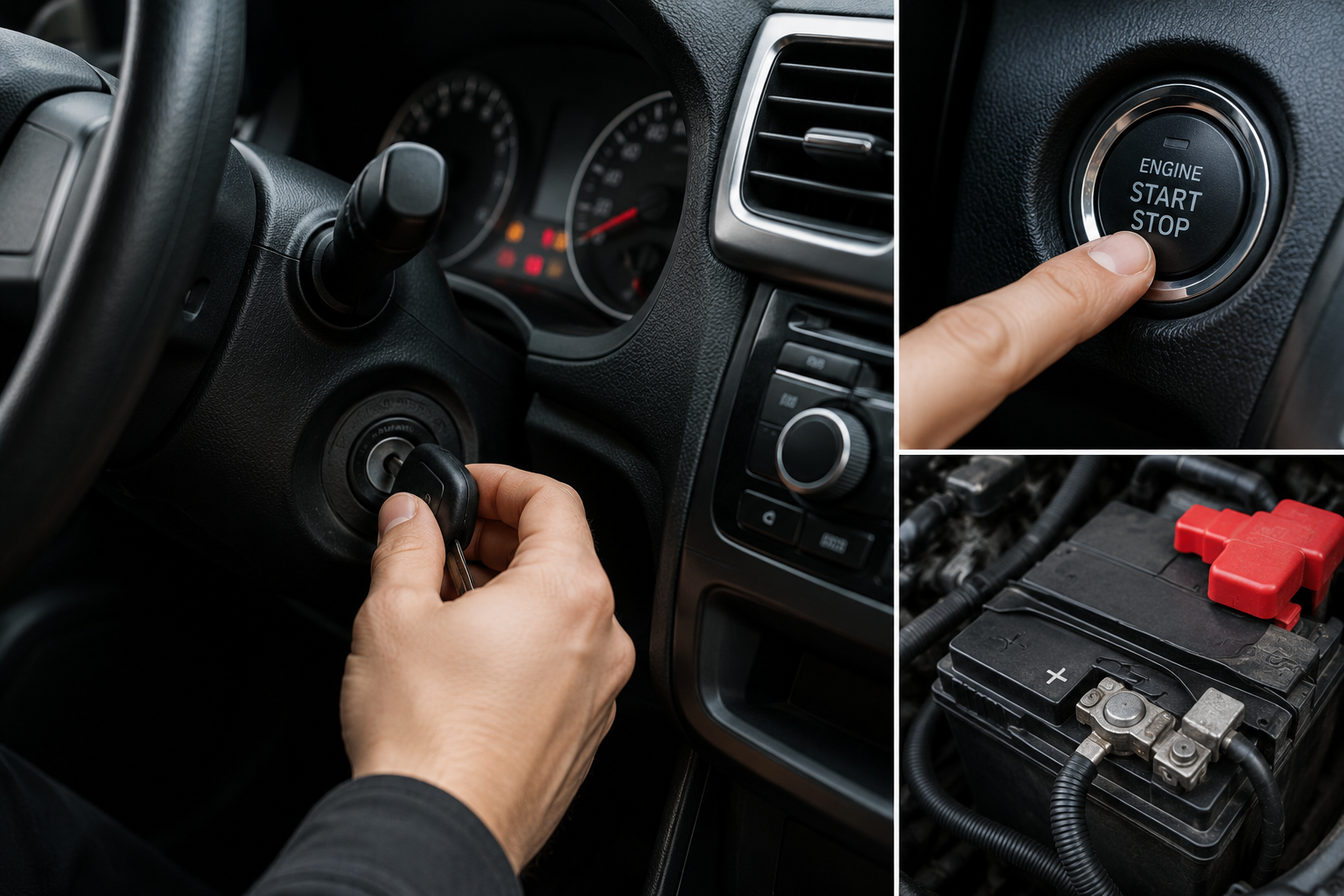
You turn the key or press Start and hear clicking — but the engine does not crank. Before you call a tow truck or panic, here is what the sound is actually telling you: the clicking noise is your car’s electrical system attempting to engage the starter motor with insufficient power. Whether you hear one single loud click or rapid-fire clicking changes the diagnosis completely. This guide tells you exactly what your specific clicking pattern means, the step-by-step fix for each cause, and how to get back on the road right now.
Diagnose Your Click in 60 Seconds — Single Click vs Rapid Clicking
The number and pattern of clicks is your fastest diagnostic tool. Read the table that matches what you hear:
| What You Hear | Most Likely Cause | Urgency | First Fix to Try |
|---|---|---|---|
| Rapid clicking — fast as a machine gun | Dead or severely weak battery | 🟡 Common — fixable yourself | Jump start |
| Rapid clicking + lights dim or flicker | Dead battery confirmed | 🟡 Battery needs charging or replacement | Jump start |
| Rapid clicking + lights stay bright | Bad battery connection or weak battery with surface charge | 🟡 Check terminals first | Clean terminals, then jump start |
| One single loud click — then nothing | Bad starter motor or starter solenoid | 🟠 Mechanical — jump start likely won’t help | Tap the starter, then diagnose |
| One single click — engine cranks slowly then stops | Very dead battery or severely corroded terminal | 🟡 Try jump start | Jump start with longer donor time |
| Click click click then complete silence | Battery completely flat + possible bad ground | 🟡 Jump start or charge | Check ground strap first |
| No click at all — total silence | Blown fuse, dead ignition switch, or completely dead battery | 🔴 Multiple possible causes | Check fuse box first |
| Clicking from dashboard, not engine area | BCM or relay clicking — different from starter clicking | 🔴 Electrical fault | Professional diagnosis needed |
Why Rapid Clicking Means Something Different Than a Single Click
This is the distinction every other guide glosses over, and it is the key to diagnosing correctly. Understanding why each sound happens prevents misdiagnosis and saves you from replacing the wrong component.
Rapid clicking explained: When you turn the key, the starter solenoid receives an electrical signal and tries to engage the starter motor. To spin the engine, the starter motor requires a very large current — typically 150 to 300+ amps at the moment of engagement. If the battery is weak or depleted, it cannot sustain this current draw. The solenoid partially engages, draws down the battery voltage, loses power, disengages, then immediately tries again. This cycle repeats dozens of times per second, creating the rapid clicking sound. The battery has enough charge to operate the solenoid repeatedly (and power your lights) but not enough to actually spin the heavy starter motor.
Single click explained: A single loud click means the solenoid engaged fully once — it sent power to the starter motor — but the starter motor itself failed to turn. Either the starter motor is mechanically failed, the solenoid is internally faulty, or there is a severe connection problem at the starter itself. A single click followed by complete silence is a strong indicator of a starter motor problem rather than a battery problem. A jump start provides more voltage but cannot fix a mechanically dead starter motor.
Cause 1 — Dead or Weak Battery (Rapid Clicking)
A weak or dead battery causes rapid clicking in the vast majority of car won’t start scenarios. The battery has enough charge to power accessories — lights, radio, power windows — but cannot deliver the 200–400 cold cranking amps required to spin the starter motor. This is why your lights look fine but the car still clicks and will not start.
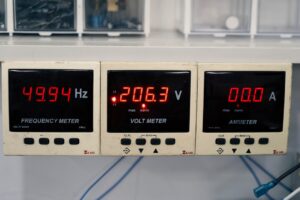
Quick voltage test: With a multimeter set to DC volts, check across the battery terminals. A battery with 12.4V or higher resting voltage has adequate charge for starting. A battery reading 12.0V or below is too depleted to reliably start the engine even if it can power accessories. A battery reading below 11.5V with accessories on is functionally dead and needs charging or replacement.
| Battery Voltage Reading | State | Action |
|---|---|---|
| 12.6V or higher | Fully charged | Battery is not the problem — check starter and connections |
| 12.2–12.5V | Partially charged | Recharge first — may start after charging |
| 11.8–12.2V | Significantly depleted | Jump start and recharge — load test the battery |
| Below 11.8V | Dead or failing | Jump start — battery likely needs replacement |
| Below 10.5V | Severely damaged | Replace battery — cannot be reliably recovered |
Step-by-step fix:
- Jump start the car using jumper cables or a portable jump starter — see our complete guide on how to jumpstart a car safely for the exact cable connection order.
- After successfully starting, drive continuously at highway speed for 20–30 minutes to allow the alternator to recharge the battery.
- Have the battery load tested free at AutoZone, O’Reilly, or NAPA. A battery that passes a voltage test can still fail a load test.
- If the battery is over 3 years old or fails the load test — replace it proactively. See our guide on how long car batteries last for replacement timing guidance.
- After jump starting, have the alternator tested simultaneously — a failing alternator is often the root cause of a battery that keeps dying.
Cause 2 — Loose or Corroded Battery Terminals (Rapid or Single Click)
This is the most frequently overlooked cause — and the cheapest to fix. Battery terminals corrode naturally over time as the battery vents small amounts of gas during charging. White, blue-green, or fuzzy deposits on the terminal posts create resistance in the electrical connection. This resistance means even a fully charged battery cannot deliver adequate current to the starter.
The deceptive part: corroded terminals can allow enough current to power lights, radio, and accessories while completely blocking the surge current needed to start the engine. A driver sees the lights are on and assumes the battery is fine — but the actual problem is a corroded connection allowing only low-current operation.
Diagnosis: Look at both battery terminals. Any white powder, blue-green fuzz, or crusty buildup is corrosion. Wiggle each cable clamp — any movement means the connection is loose. Either condition alone can prevent starting.
Step-by-step fix:
- Turn the engine off and ensure no ignition power is on.
- Disconnect the negative (black) terminal cable first, then the positive (red) terminal cable.
- Mix one tablespoon of baking soda with one cup of water. Pour it over the corroded terminals — it will fizz as it neutralizes the acid deposits.
- Scrub both the terminal posts and the cable clamp interiors with an old toothbrush until all corrosion is removed.
- Rinse with clean water and dry thoroughly with a rag.
- Reconnect positive terminal first, then negative terminal. Tighten each clamp until absolutely no movement is possible.
- Apply a thin coat of dielectric grease or terminal protector spray to prevent future corrosion.
- Attempt to start the car. Clean, tight terminals often resolve clicking immediately.
Cause 3 — Bad Ground Connection (Rapid Clicking or Single Click)
This is the most commonly missed diagnosis — even by mechanics. The ground strap completes the electrical circuit between the battery negative terminal and the engine block and chassis. It is the return path for every amp of current the starter motor draws. A corroded, loose, or broken ground strap creates high resistance in this return path, limiting the current the starter can receive.
A car with a bad ground strap can show all the same symptoms as a dead battery — rapid clicking, dim lights, accessories that work but engine that will not crank. A jump start may not help because the jump cables are connected to the same compromised ground path. A fully charged, brand new battery will still produce rapid clicking if the ground connection is faulty.
Where to check: Find the heavy black cable that runs from the negative battery terminal to the engine block. There is typically also a second ground strap from the engine block to the chassis. Inspect both for corrosion, looseness, or visible damage. Check that the connection points on the engine block and chassis are clean and tight — not rusted or loose.
Quick diagnostic trick: Attach a set of jumper cables from the negative battery terminal directly to an unpainted metal surface on the engine block — bypassing the existing ground strap. If the car starts immediately, the ground strap is the problem.
Cause 4 — Bad Starter Motor (Single Click)
A single loud click that does not repeat is the classic starter motor failure signature. The solenoid receives power and engages once — you hear the click — but the starter motor’s armature, brushes, or internal components have failed and the motor does not spin. A jump start will not fix a mechanically failed starter motor because the problem is mechanical, not electrical.
The tapping trick: On vehicles where the starter is accessible (many rear-wheel-drive vehicles, some front-wheel-drive vehicles), a stuck or intermittently failed starter can sometimes be freed by tapping it firmly with a hammer or wrench handle while an assistant attempts to start the car. This temporary fix works by freeing a seized armature or breaking through light oxidation on the commutator contacts. It is a temporary measure only — the starter will need replacement.
Confirming the diagnosis: Jump start the car using the correct cable method. If the car starts after jump starting — the problem is the battery, not the starter. If jump starting provides no improvement (still just one click, engine still does not crank) — the starter motor has failed and needs replacement.
Replacement cost: Starter motor replacement runs $250–$600 at a shop including parts and labor. DIY is possible on many vehicles — the starter is typically accessible from underneath and requires disconnecting two wires and three to four bolts. A remanufactured starter from AutoZone or O’Reilly costs $80–$180 with a core charge refund.
Cause 5 — Faulty Starter Solenoid
The starter solenoid is the electromagnetic switch that connects battery power to the starter motor when you turn the key. On some vehicles, the solenoid is mounted separately from the starter — on others it is integrated into the starter assembly. A failed solenoid can produce a single click (it tries to engage but cannot complete the circuit) or intermittent starting behavior where the car starts fine sometimes and clicks other times.
On older vehicles (particularly GM trucks and older Fords), the solenoid is mounted on the firewall or inner fender and can be replaced independently for $20–$60 in parts. On most modern vehicles, the solenoid is integrated into the starter assembly and both are replaced together. If your single-click diagnosis points to a solenoid, most mechanics will replace the entire starter assembly rather than just the solenoid for reliability.
Cause 6 — Failing Alternator Running Battery Down
An alternator that is not properly charging the battery causes the battery to gradually deplete during driving. Each morning the battery has slightly less charge than the day before until it no longer has enough to start the engine. If your car starts fine in the morning after sitting all night (when the battery has had time to partially recover) but dies after driving — a failing alternator is the primary suspect.
Test the alternator with the engine running: connect a multimeter to the battery terminals. A healthy alternator produces 13.7–14.7 volts at idle. Below 13.5 volts means the alternator is undercharging. A car that starts with a jump but dies within minutes of removing the jumper cables — or within a few miles of driving — almost always has a failed alternator. See our complete bad alternator vs dead battery diagnostic guide for a definitive 5-step test.
Step-by-Step Field Fix — What to Do Right Now
- Identify your click pattern. Rapid clicking = battery/connection problem. Single click = starter problem. Use the diagnostic table at the top of this guide.
- For rapid clicking — check terminals immediately. Before even attempting a jump start, look at both battery terminals. Any corrosion or looseness? Fix it first. A jump start through corroded terminals often fails or gives partial results.
- Attempt a jump start (rapid clicking scenarios). Connect jumper cables correctly — red to dead positive, red to donor positive, black to donor negative, black to unpainted engine metal on dead car. Let donor car run for 3 minutes before trying to start.
- For single click — try the tapping trick. If you can access the starter, tap it firmly 3–4 times with a wrench handle while an assistant attempts to start. This sometimes temporarily fixes a stuck starter armature.
- Check the ground connection. If a jump start helps but the car continues clicking after a few minutes — bad ground is likely. Use the jumper cable bypass trick described above to confirm.
- If nothing works — call for a tow. A mechanically failed starter, blown fusible link, or failed ignition switch requires shop diagnosis. Do not keep trying to force a start — you risk draining donor batteries and potentially damaging ECU components through repeated low-voltage cycling.
Complete Repair Cost Guide
| Repair | DIY Cost | Shop Cost | Difficulty |
|---|---|---|---|
| Battery replacement | $80–$200 | $150–$300 | Easy — 15 min |
| Terminal cleaning | Free | $20–$50 | Very easy — 10 min |
| Battery cable replacement | $20–$60 | $80–$200 | Easy |
| Ground strap replacement | $15–$40 | $80–$150 | Easy |
| Starter motor replacement | $80–$180 parts | $250–$600 | Moderate |
| Starter solenoid (separate) | $20–$60 | $80–$150 | Easy on older vehicles |
| Alternator replacement | $100–$300 parts | $350–$800 | Moderate |
| Ignition switch replacement | $30–$80 parts | $150–$400 | Moderate |
Frequently Asked Questions
Why does my car just click and not start?
Rapid clicking when your car won’t start almost always means a dead or severely weak battery that cannot deliver enough current to spin the starter motor — only enough to make the solenoid click repeatedly. A single loud click followed by silence usually indicates a failed starter motor or starter solenoid. The first step is identifying whether you hear rapid clicking or a single click, as this determines your diagnosis and fix completely differently.
My car clicks but lights work — is it the battery or the starter?
Lights working does not rule out a battery problem. Accessories like lights and radio draw 5–15 amps. The starter motor draws 200–400+ amps. A battery can have enough charge for accessories while being too depleted to spin the starter. If you hear rapid clicking with lights working, the battery is the most likely cause. Try a jump start — if it works, the battery confirmed the problem. If you hear a single click with lights working, a bad starter motor is more likely.
Can a jump start fix a clicking car?
Yes — if the clicking is caused by a dead battery, corroded terminals, or a weak battery. A jump start provides sufficient voltage and current to spin the starter motor when the car’s own battery cannot. However, a jump start will NOT fix a mechanically failed starter motor, a blown fuse, a bad ignition switch, or a completely broken ground strap. If jump starting produces no improvement in a single-click situation, the problem is mechanical rather than electrical.
What does it mean when your car clicks once?
A single loud click when trying to start the car is the classic signature of a bad starter motor or failed starter solenoid. The solenoid received power and attempted to engage once — producing the click — but the starter motor itself failed to spin the engine. Unlike rapid clicking (which responds to a jump start), a single click usually indicates a mechanical failure that requires starter motor inspection or replacement rather than battery charging.
How do I fix a car that clicks when starting?
For rapid clicking: clean the battery terminals first, then attempt a jump start. If the car starts, have the battery load tested and the alternator output measured — replace whatever fails. For a single click: try tapping the starter motor firmly with a wrench handle while an assistant attempts to start. If this helps temporarily, the starter needs replacement. If nothing works, check the ground connection using the jumper cable bypass method, then call for professional diagnosis.
Related Guides
Once you identify the cause, these guides take you through the specific fixes: our complete jumpstart guide covers the exact safe cable connection order to avoid electrical damage. For battery replacement timing, see our guide on how long car batteries last. If you are unsure whether the battery or alternator is the root cause, our bad alternator vs dead battery diagnostic gives you a definitive 5-step test with a multimeter.