Can I drive if my car is overheating
If your car is overheating, you should not continue driving until you understand the cause and the engine has returned to a safe operating temperature. Driving with an overheating engine can damage important components, including the head gasket, cylinder head, and engine block. In severe cases, it can cause complete engine failure and lead to expensive repairs.
Sometimes, an engine temperature rises because of a minor cooling-system issue. However, overheating can also indicate a serious mechanical problem that needs immediate attention. Knowing what to do when your temperature gauge rises can help protect your engine and keep you safe on the road.
In this guide, we explain whether you can drive an overheating car, how far you might be able to go, what to do when the temperature rises, and how to prevent the problem from happening again.
Can I Drive My Car If It Is Overheating?
Generally, no. You should stop driving as soon as it is safe to pull over if your car is overheating.
Your vehicle’s cooling system is designed to maintain the engine within its normal operating temperature range. It uses coolant, a radiator, a water pump, a thermostat, cooling fans, and other components to prevent excessive heat buildup.
When this system cannot remove enough heat, the engine temperature rises. Continuing to drive can make the problem worse, especially if coolant is leaking or the water pump is not circulating coolant properly.
Here is what you should know:
- If the temperature gauge is approaching the red zone: Reduce unnecessary engine load and find a safe place to pull over.
- If the gauge reaches the red zone or a temperature warning appears: Stop as soon as it is safe and switch off the engine.
- If steam comes from under the hood: Pull over safely, turn off the engine, and stay clear of the steam.
- If you notice coolant leaking, a burning smell, or unusual engine noises: Do not continue driving.
- If the engine loses power or begins running roughly: Stop safely and arrange professional assistance.
Do not rely on the fact that your car is still moving normally. An engine can suffer damage even when it appears to be running properly.
How Far Can You Drive an Overheating Car?
There is no safe, universal distance you can drive with an overheating engine. The answer depends on the severity of the problem, the engine’s temperature, the amount of coolant available, and the condition of the cooling system.
In some cases, an engine can sustain damage within minutes of severe overheating. In other situations, the temperature may rise gradually because of a cooling fan or other intermittent problem.
Consider these situations:
1. The Temperature Gauge Is Slightly Higher Than Normal
If the gauge rises above its usual position but has not reached the red zone, reduce engine load and look for a safe place to stop. Turn off the air conditioning if doing so helps reduce engine load, but do not use this as a reason to keep driving if the temperature continues to rise.
Allow the engine to cool and have the cooling system checked if the temperature does not return to normal.
2. The Temperature Gauge Is in the Red Zone
Stop driving as soon as it is safe. Turn off the engine and do not restart it simply to see whether the temperature improves.
At this point, continuing to drive may cause serious engine damage. Arrange roadside assistance or a tow to a repair shop.
3. Steam Is Coming From Under the Hood
Steam may indicate that coolant is boiling or escaping from the cooling system. Pull over safely, turn off the engine, and keep a safe distance from the steam.
Never open the radiator cap or coolant reservoir cap while the engine is hot. The cooling system may be pressurized, and escaping hot coolant or steam can cause severe burns.
Wait until the engine has cooled completely before anyone checks the coolant level.
4. The Temperature Drops After You Stop
A temperature gauge that returns to normal after stopping does not necessarily mean the problem has disappeared. A cooling fan, thermostat, coolant leak, or other component may be malfunctioning intermittently.
If the car has already overheated significantly, have it inspected before driving again.
What Should You Do If Your Car Starts Overheating While Driving?
If your temperature gauge suddenly rises, follow these steps.
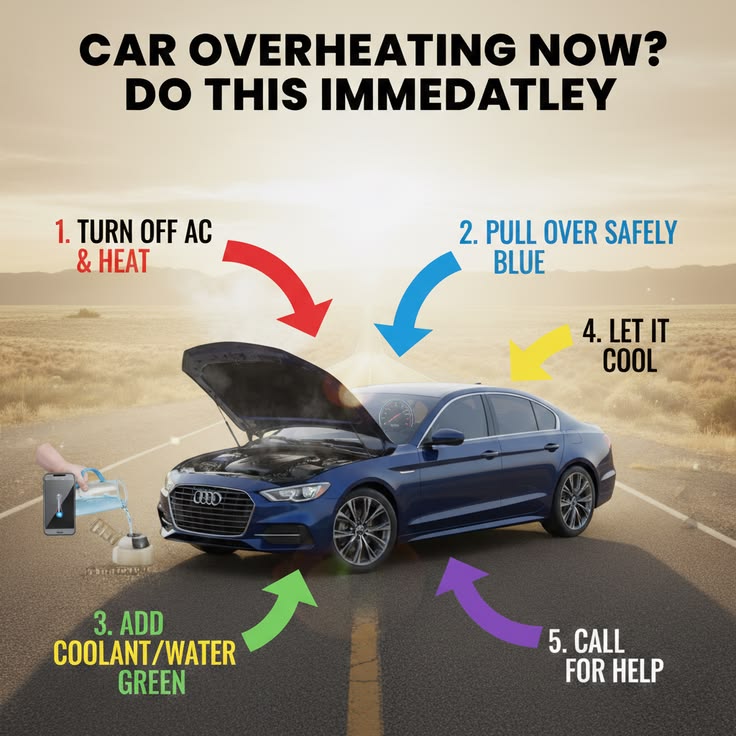
Step 1: Turn Off the Air Conditioning
Switch off the air conditioning to reduce the engine’s workload. This may help in a mild situation, but it is not a substitute for stopping if the engine continues to overheat.
Step 2: Pull Over Safely
Find a safe place away from moving traffic. Do not stop in a dangerous location if you can safely reach a nearby pull-off, but do not continue a long journey in the hope that the temperature will fall.
Turn on your hazard lights if appropriate.
Step 3: Turn Off the Engine
Once safely stopped, switch off the engine, particularly if the gauge is in the red zone, a temperature warning is displayed, or steam is visible.
Do not repeatedly restart the engine to check whether it has cooled down.
Step 4: Allow the Engine to Cool Completely
Wait for the engine to cool before inspecting the cooling system. This can take a considerable amount of time, depending on the weather and the severity of the overheating.
Do not touch hot engine components or attempt to open a pressurized coolant cap while the system is hot.
Step 5: Check for Visible Problems When Safe
Once the engine is completely cool, you may check the coolant reservoir level according to your owner’s manual. Look for visible coolant leaks beneath the vehicle, damaged hoses, or other obvious problems.
Do not put your hands near cooling fans, as electric fans can start unexpectedly on some vehicles.
If the coolant is low, the cause still needs to be identified. Simply adding coolant may not solve the problem if there is a leak or a failed component.
Step 6: Arrange Professional Assistance
If the engine reached the red zone, produced steam, lost power, or showed signs of a serious leak, arrange a tow rather than driving to a repair shop.
A mechanic can inspect the cooling system, identify the cause, and check for possible engine damage.
What Causes a Car to Overheat?
Several problems can prevent an engine from maintaining a safe temperature.
1. Low Coolant Level
Coolant absorbs heat from the engine and transfers it to the radiator. If the coolant level is too low, the system may not be able to control engine temperature effectively.
Low coolant can result from leaks, a faulty radiator cap, damaged hoses, or other cooling-system problems.
2. A Coolant Leak
A leaking radiator, water pump, hose, heater core, or coolant reservoir can allow coolant to escape. Signs may include a puddle beneath the car, a sweet smell, or repeated drops in the coolant level.
Some leaks occur only when the system is hot and pressurized, so a leak may not always be obvious when the car is parked.
3. A Faulty Thermostat
The thermostat regulates coolant flow through the engine and radiator. If it becomes stuck closed, coolant circulation may be restricted, causing the engine to overheat.
4. A Damaged Water Pump
The water pump circulates coolant throughout the cooling system. If it fails or cannot circulate coolant effectively, engine temperature can rise quickly.
5. A Malfunctioning Radiator Fan
The cooling fan helps remove heat from the radiator, particularly when the car is stationary or moving slowly. If the fan motor, fuse, relay, wiring, or control system fails, the engine may overheat in traffic.
6. A Blocked or Damaged Radiator
A radiator with restricted coolant flow or poor airflow may struggle to release heat. Blockages, corrosion, and damaged fins can reduce its effectiveness.
7. A Blown Head Gasket
A failed head gasket can allow combustion gases to enter the cooling system or coolant to leak into the engine’s cylinders or oil passages. This can cause repeated overheating and serious engine damage.
Possible warning signs include persistent white exhaust smoke, unexplained coolant loss, or milky-looking engine oil, although these symptoms can have other causes and do not prove a head gasket has failed.
Can You Drive a Car That Overheats Only in Traffic?
Not safely without identifying the cause.
If the temperature rises mainly in traffic but returns to normal at highway speeds, the cooling fan may not be operating correctly. Other possibilities include a partially blocked radiator, low coolant, or another cooling-system fault.
At higher speeds, airflow through the radiator may help remove more heat. However, the fact that the car cools down while moving does not mean the underlying problem is harmless.
Avoid sitting in traffic or continuing your journey to test whether the problem goes away. Have the cooling system inspected.
Can You Drive After Adding Coolant?
Adding the correct coolant may help if the engine has cooled completely and the coolant level is low. However, it does not automatically make the car safe to drive.
Before considering driving again, the cause of the low coolant level must be understood. If the system is leaking, the coolant may escape again. If a thermostat, water pump, radiator, or head gasket has failed, topping up the reservoir may not resolve the overheating.
Follow your vehicle manufacturer’s instructions for checking and filling coolant. Never pour cold coolant into an excessively hot engine unless the manufacturer’s emergency instructions specifically direct you to do so.
If the car overheated severely, reached the red zone, or produced steam, the safest option is to have it towed and inspected.
What Happens If You Keep Driving an Overheating Car?
Continuing to drive with excessive engine temperature can cause several problems:
- Blown head gasket: Excessive heat can damage the seal between the cylinder head and engine block.
- Warped cylinder head: High temperatures can distort engine components and prevent proper sealing.
- Engine oil breakdown: Excessive heat can reduce the oil’s ability to protect moving parts.
- Internal engine damage: Pistons, cylinders, bearings, and other components may suffer damage.
- Complete engine failure: Severe overheating can cause the engine to seize or require major repairs or replacement.
The cost of repairing the original cooling-system fault is often much lower than the cost of repairing an engine damaged by continued overheating.
How Can You Prevent Your Car From Overheating?
Regular maintenance can reduce the risk of overheating and help you identify developing problems early.
- Check coolant levels regularly. Follow the owner’s manual and inspect the reservoir only when the engine is cool.
- Use the correct coolant. Choose the type and mixture specified by the vehicle manufacturer.
- Inspect hoses and connections. Look for cracks, swelling, loose connections, and signs of leakage.
- Maintain the radiator. Keep its external cooling fins clear of excessive dirt and debris without damaging them.
- Check the cooling fan. If the car overheats in traffic, have the fan and its control circuit tested.
- Service the cooling system as recommended. Follow the manufacturer’s guidance for coolant replacement and component inspections.
- Pay attention to warning signs. An unusual temperature reading, repeated coolant loss, or a sweet smell should not be ignored.
Frequently Asked Questions
Can I drive my car for five minutes if it is overheating?
There is no guaranteed safe five-minute window. Severe overheating can damage an engine quickly. Pull over safely and switch off the engine rather than trying to reach your destination.
Should I turn on the heater when my car overheats?
In some vehicles, turning the cabin heater to maximum heat can temporarily transfer some heat away from the engine. However, it is only a temporary measure to help you reach a safe stopping place if necessary. It does not make continued driving safe, especially if the gauge is in the red zone or steam is visible.
Will my car stop running if it overheats?
Not necessarily. Some vehicles may reduce engine power or enter a protective mode, but others may continue running while damage develops. Never depend on the car to shut itself down before damage occurs.
Can low coolant cause a car to overheat?
Yes. Low coolant can prevent the engine from transferring heat effectively. The important step is to find out why the coolant level dropped and correct the underlying problem.
Should I restart my car after it overheats?
Do not restart it simply to test whether the problem has gone away. If the engine overheated severely, reached the red zone, or produced steam, arrange professional assistance. A mechanic should determine whether restarting is safe.
Is it safe to drive if the temperature gauge returns to normal?
Not necessarily. The temperature may return to normal temporarily even though the cooling system still has a fault. If the car overheated, investigate the cause before resuming normal driving.
Conclusion
You should not continue driving a car that is overheating. Stop in a safe place, switch off the engine, and allow it to cool completely. Never open a hot radiator or pressurized coolant reservoir cap, and arrange a tow if the engine reached the red zone, produced steam, or showed signs of serious coolant loss.
Overheating can result from low coolant, leaks, a faulty thermostat, a damaged water pump, radiator problems, or a more serious engine fault. Identifying the cause early can help prevent expensive repairs.
If your car has overheated more than once, do not simply keep adding coolant and driving. Have a qualified mechanic inspect the cooling system before the problem causes further damage.