Best Oil for High Mileage Cars: Top 6 Picks + Exact Viscosity Guide
What’s the best oil for high mileage cars? Get our top 6 picks for engines over 75,000 miles, a symptom-based oil selector, exact viscosity guide, and the one mistake that destroys aging engines faster than anything else.
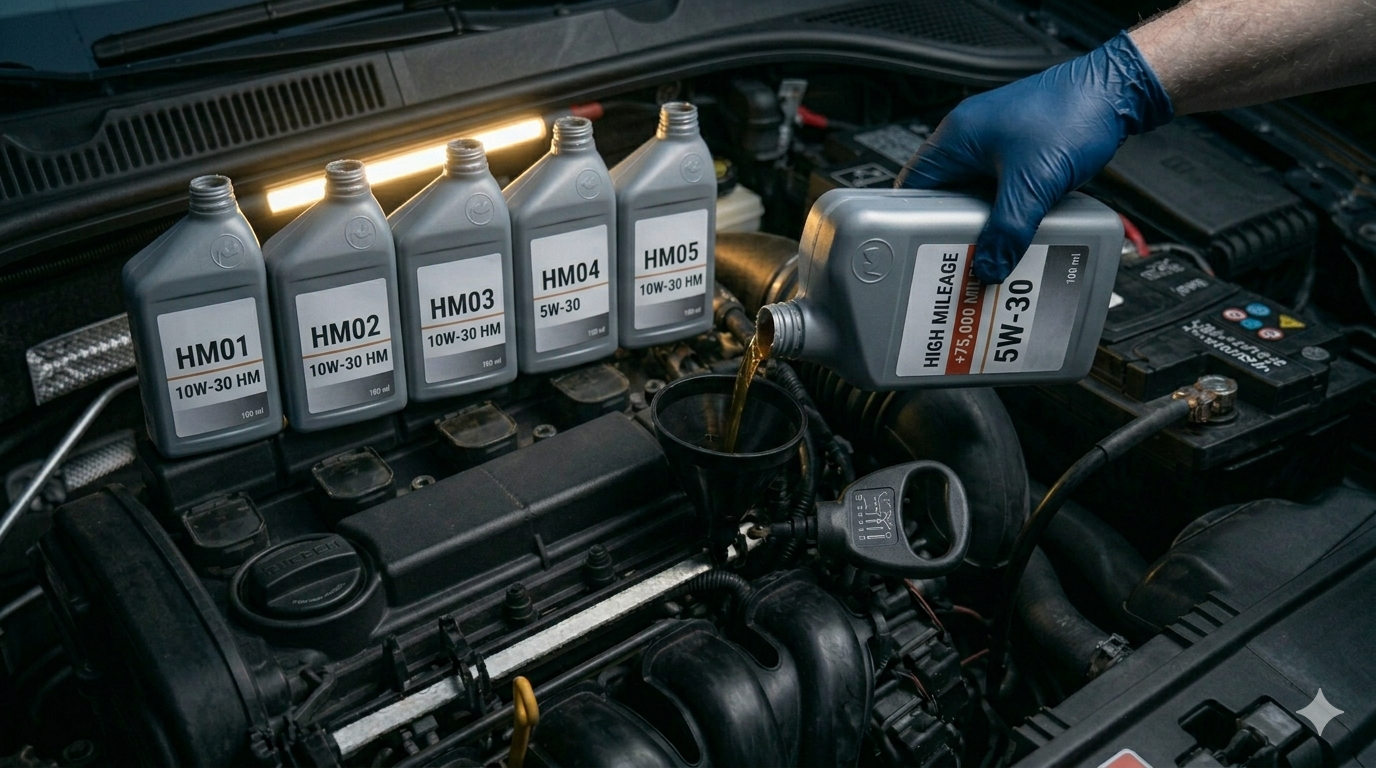
High Mileage Oil Comparison — All 6 Picks
| Brand | Type | Best For | Interval | Price/5qt | Seal Strength |
|---|---|---|---|---|---|
| Mobil 1 High Mileage | Full synthetic | Overall best | 10K miles | $30–$45 | Strong |
| Valvoline MaxLife | Full synthetic | Seal leaks | 10K miles | $35–$50 | Very strong |
| Pennzoil High Mileage | Full synthetic | Sludge/deposits | 10K miles | $28–$42 | Strong |
| Castrol EDGE HM | Full synthetic | European cars | 15K miles | $35–$50 | Strong |
| Castrol GTX HM | Synthetic blend | Budget | 7.5K miles | $16–$24 | Moderate |
| AMSOIL Signature HM | Full synthetic | Towing/severe | 25K miles | $50–$65 | Strong |
Exact Viscosity Guide — What Grade to Use at Your Mileage
The biggest mistake high mileage drivers make is jumping to a thicker viscosity to try to reduce oil consumption without understanding the consequences. Here is the correct approach:
| Mileage Range | Recommended Viscosity | Notes |
|---|---|---|
| 75K–100K miles | Same as OEM specification | Do not change viscosity — switch formula only |
| 100K–150K miles, no consumption | OEM spec or one grade thicker (5W-20 → 5W-30) | Only go thicker if OEM allows it |
| 100K–150K miles, burning 1 qt/2,000 mi | One grade thicker than OEM (5W-30 → 5W-40) | Check owner’s manual for approved alternatives |
| 150K+ miles, burning 1 qt/1,000 mi | 5W-40 or 10W-40 depending on climate | Diagnose root cause simultaneously |
| Any mileage, turbo engine | Strictly follow OEM — never go thicker | Turbo solenoids require exact viscosity |
| Cold climate (below 20°F regularly) | 0W-XX regardless of mileage | Cold flow protects on startup when wear is highest |
| Hot climate (above 95°F regularly) | 5W-30 minimum — avoid 0W-20 if possible | Higher base viscosity for heat stability |
Critical warning: Never jump more than one viscosity grade (for example, from 5W-20 to 10W-40) in a single oil change. This is called “double-thickening” and can starve variable valve timing solenoids that require the exact viscosity specified by the manufacturer. Go one grade at a time, and only after confirming the thicker grade is within the manufacturer’s approved range.
What Happens If You Don’t Switch to High Mileage Oil
Running regular synthetic oil in a high mileage engine is not immediately catastrophic — but the cumulative cost of not switching adds up faster than most drivers realize:
- Continued seal hardening: Regular oil does not contain seal conditioners. Seals continue to harden and shrink, and minor seeps become active leaks. A rear main seal leak that costs $600–$1,200 to repair starts as a seep that high mileage oil might have controlled.
- Progressive oil consumption: Without the volatility control and viscosity stability of high mileage formula, oil consumption in aging engines typically increases 15–25% per year once past 100,000 miles on regular synthetic.
- Sludge accumulation: Regular oil’s detergent package is optimized for newer engines with tight tolerances. Aging engines with more blowby produce more acids and combustion byproducts that overwhelm a standard detergent package faster.
- Accelerated wear: The ZDDP (zinc dialkyldithiophosphate) concentration in high mileage oils is typically 20–40% higher than in standard synthetics, providing meaningfully better protection for worn cam lobes and lifters.
How to Switch to High Mileage Oil — Step by Step
- Do not flush the engine first. Engine flushes with high mileage engines are controversial — a heavily solvented flush can dislodge sludge deposits that are actually plugging small seeps and seals. Do a normal drain and refill with the new high mileage oil.
- Use the correct viscosity for your climate and OEM specification. Reference the table above — do not simply grab whatever is on the shelf.
- Replace the oil filter simultaneously. A contaminated filter from the old oil defeats the purpose of the new high mileage formula. Use a quality filter with a silicone anti-drain-back valve.
- Change interval for first high mileage change: 5,000 miles. The first change with high mileage oil mobilizes accumulated deposits from the previous oil. These suspended deposits will load the new oil faster. Drain it at 5,000 miles and start fresh — subsequent changes can go to full interval.
- Monitor oil level weekly for the first month. High mileage oil’s seal conditioners take 300–500 miles to fully swell seals. During this period, oil consumption may temporarily increase as the oil reaches more passages. This is normal and temporary.
Frequently Asked Questions
What is the best oil for high mileage cars?
The best oil for high mileage cars overall is Mobil 1 High Mileage Full Synthetic 5W-30 for its combination of low NOACK volatility, strong anti-wear protection, and reliable seal conditioning. For engines specifically experiencing oil leaks, Valvoline MaxLife has the strongest seal conditioner package. For sludge-heavy engines, Pennzoil High Mileage offers the most effective detergent chemistry. Match the formula to your specific engine symptom using the selector table in this guide.
At what mileage should you switch to high mileage oil?
The standard recommendation is 75,000 miles — but the more accurate trigger is the appearance of any high mileage symptom: oil seeping from seals, burning more than 1 quart per 2,500 miles, or visible sludge on the dipstick. A well-maintained engine at 80,000 miles may not need high mileage oil yet, while a poorly maintained engine at 60,000 miles might genuinely benefit from it. Use the decision framework in this guide rather than mileage alone.
Is high mileage oil bad for newer engines?
Not harmful, but unnecessary. High mileage oil’s seal conditioners can cause gaskets and seals in a newer engine (under 75,000 miles) to swell beyond their optimal state, potentially causing leaks that did not exist before. The extra detergent and anti-wear additives are harmless in a newer engine but you are paying a premium for benefits your engine does not yet need. Use regular full synthetic until 75,000 miles or until symptoms appear.
Can I mix high mileage oil with regular oil?
Yes — mixing is safe in an emergency top-off situation. All API-rated motor oils are formulated to be chemically compatible with each other. However, mixing dilutes the specific high mileage additives (seal conditioners, extra ZDDP) that you are paying for. For the full benefit of high mileage formula, use it exclusively, not mixed with regular synthetic or conventional oil.
Does high mileage oil really stop leaks?
For minor seeps and early-stage leaks from dried or shrunken seals — yes, genuinely. High mileage oil’s ester-based seal conditioners cause rubber components to swell toward their original dimensions, which can slow or stop small leaks from valve cover gaskets, timing cover seals, and the rear main seal. For major leaks with visible drips, high mileage oil reduces but does not stop the leak — physical seal replacement is required. High mileage oil is prevention and early-stage treatment, not a substitute for mechanical repair on an actively leaking seal.
Related Guides
Choosing the right oil is step one — knowing when to change it is equally important. Our complete guide on how often to change synthetic oil covers exact intervals for every vehicle type and driving condition. Learn the 10 signs your car needs an oil change so you catch the warning before damage starts. And if your high mileage engine is also showing battery symptoms, our car battery lifespan guide covers exactly what to expect at different mileage ranges.