Duramax LZ0 Engine Problems: What Owners Are Reporting
The 3.0L LZ0 Duramax is GM’s newest diesel inline-six, introduced for the 2025 model year as the replacement for the well-regarded LM2. It brought more power and torque, but as a genuinely new engine design, it also brought a handful of documented issues that owners and shoppers should know about before assuming it carries the LM2’s reliability record forward unchanged.
What You’ll Find in This Guide
- Which vehicles use this engine
- The crankshaft thrust bearing issue (GM Service Bulletin)
- The highway misfire issue (GM Service Bulletin)
- Oil consumption, oil leaks, and other reported concerns
- Frequently asked questions
Duramax LZ0 Engine Problems at a Glance
| Issue | Reported Symptom | GM Documentation |
|---|---|---|
| Crankshaft thrust bearing wear | Rattle or knock near the bellhousing, code P06DD | Service Bulletin 25-NA-307 |
| Highway misfire / hesitation | Shudder during power-on downshift, 55-70 mph | Service Bulletin PIP6091 |
| Oil consumption | GM states burning a quart per 1,000 miles while towing is within spec | Owner’s manual guidance |
| Rear main seal and oil plug leaks | Oil around the bellhousing area | Reported by independent technicians |
| Turbo and oil intake issues | Turbo codes, oil consumption, eventual engine replacement in reported cases | Reported by independent technicians |
Which Vehicles Use the LZ0
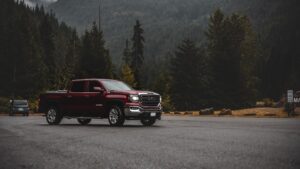
The LZ0 appears in the 2025 and later Chevrolet Silverado 1500, Chevrolet Tahoe, Chevrolet Suburban, GMC Sierra 1500, GMC Yukon, and GMC Yukon XL. If you’re shopping for one of these in a 2025 or 2026 model year with the 3.0L diesel option, you likely have this engine rather than the older LM2.
The Crankshaft Thrust Bearing Issue (Read This First)
This is the most serious documented issue on the LZ0, and it deserves top billing rather than being buried under routine maintenance topics. GM Service Bulletin 25-NA-307, covering 2025 and 2026 model-year vehicles with this engine, describes owners reporting a mechanical rattle or knocking noise from the bellhousing area, often near the torque converter or flexplate, frequently accompanied by a malfunction indicator light and diagnostic code P06DD, which relates to oil pressure control valve performance. GM’s bulletin links this combination to excessive crankshaft end play, associated with thrust bearing wear. Some owner reports online describe more severe outcomes, including engines that required full replacement. If you own or are considering an early-production LZ0-equipped vehicle, a rattle or knock near the bellhousing combined with a P06DD code is worth taking to a dealer promptly rather than assuming it’s normal diesel clatter.
The Highway Misfire and Hesitation Issue
Separately, GM has documented an occasional misfire under Service Bulletin PIP6091, covering 2024 through 2026 model-year trucks and SUVs with this engine. Owners report a shudder or hesitation specifically during a power-on downshift while traveling 55 to 70 mph, often after an extended period of steady highway driving. GM’s preliminary information points to condensation potentially entering the engine as a contributing factor. Notably, the bulletin states this may not always trigger a stored diagnostic code, which makes it a harder issue to pin down through a simple scan if you experience it.
Oil Consumption and Leaks
GM’s own documentation states that burning up to a quart of oil per 1,000 miles while towing falls within acceptable limits for this engine, a standard that some independent diesel mechanics have publicly disputed as too permissive, since it effectively means adding gallons of oil between scheduled services could be considered normal rather than a problem. Separately, independent technicians have reported oil leaks at the rear main seal and rear oil plug, an area that’s expensive to service because the transmission typically has to be removed to access it. A wet-belt-driven oil pump at the rear of the engine has also been flagged by at least one reviewing mechanic as a lower-durability design choice for a truck engine, though it hasn’t been documented as a widespread failure point yet.
Repair Cost Guide
| Repair | Estimated Cost |
|---|---|
| Crankshaft thrust bearing diagnosis and repair | Varies significantly, check warranty status first |
| Rear main seal replacement (transmission removal required) | $800-2,000 |
| Turbo replacement | $1,500-3,500 |
| Routine oil change (correct diesel spec) | $100-180 |
Frequently Asked Questions
Is the Duramax LZ0 reliable?
It’s too new to have a long-term track record, and GM has already issued two service bulletins covering a thrust bearing wear pattern and a highway misfire issue in its first two model years. This doesn’t necessarily mean widespread failure, but it does mean the LZ0 hasn’t yet earned the reliability reputation its LM2 predecessor built over years of service.
What does code P06DD mean on a Duramax LZ0?
P06DD relates to oil pressure control valve performance, and GM’s own service bulletin links it, when paired with a rattle or knock near the bellhousing, to excessive crankshaft end play from thrust bearing wear.
Should I buy a 2025 or 2026 truck with the LZ0 engine?
Many owners report trouble-free experience, and GM is actively documenting and addressing known issues through service bulletins. If you’re considering one, ask specifically about any bellhousing noise or highway shudder during a test drive, and check the VIN for open bulletins or recalls before purchasing.
Is the LZ0 the same as the LM2 Duramax?
No, the LZ0 is a new design introduced for 2025, replacing the LM2. They share the 3.0L inline-six diesel layout and general concept, but the LZ0 is a different engineering generation with its own specific issues, separate from whatever reliability record the LM2 built.
Related Guides
If you’re hearing a similar knock or rattle on a different GM engine, our GM 6.2L engine problems guide covers a comparable rotating-assembly concern on GM’s larger gas V8. For general knock diagnosis across any engine, see our engine knocking sound causes guide.
Muhammad Ahmad is an automotive enthusiast and the founder of AutoUpdateZone. With years of hands-on experience diagnosing and maintaining vehicles, he has developed a deep understanding of engine systems, electrical diagnostics, brake systems, and preventative maintenance.