Car Leaking Oil: 8 Causes Diagnosed by Location + Color (Is It Safe to Drive?)
Car leaking oil? The puddle location tells you almost everything — front means front seal or valve cover, middle means oil pan or filter, rear means rear main seal. Our location-plus-color diagnostic matrix identifies your exact leak before you spend anything, with repair costs and the honest truth about stop-leak additives.
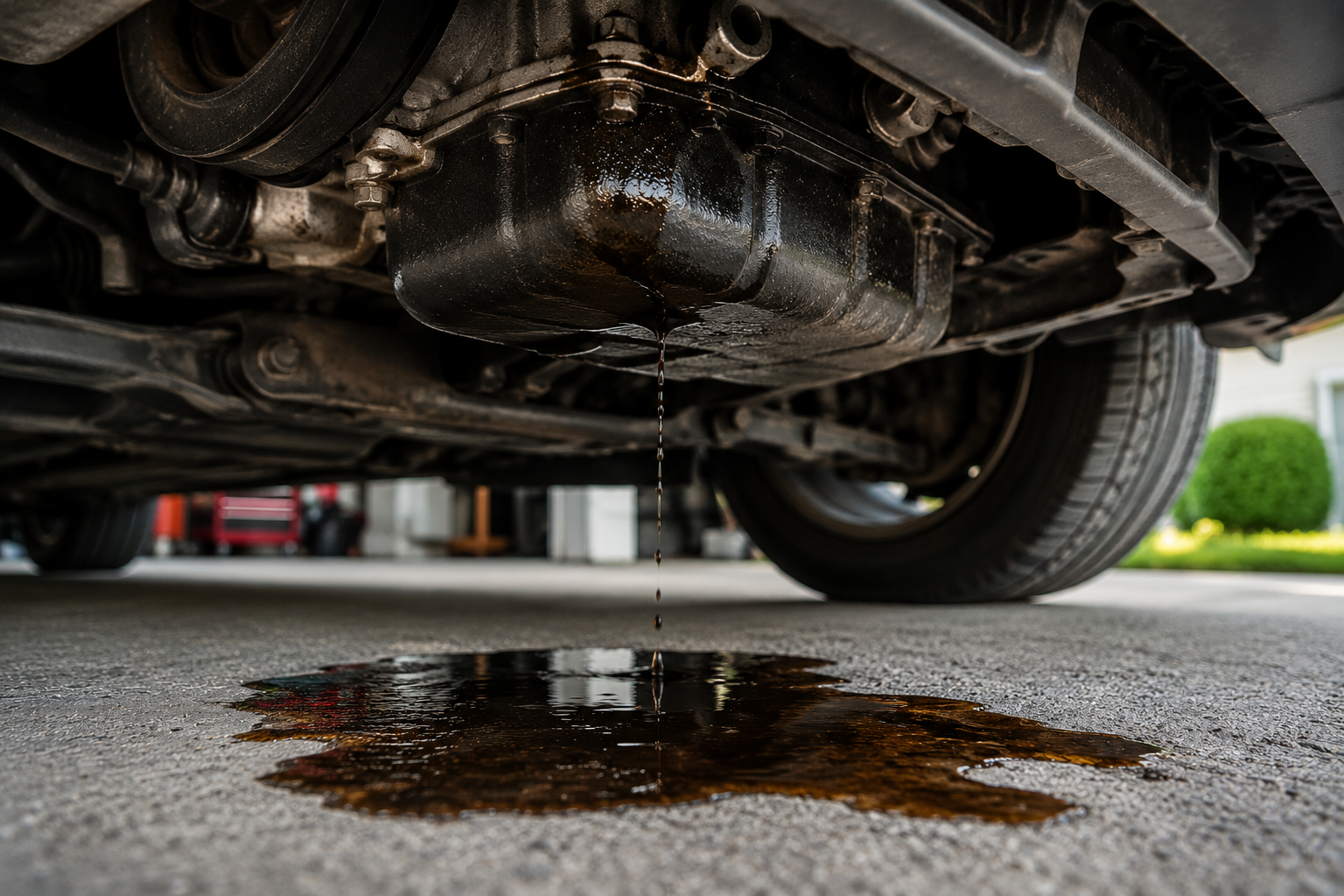
When you find oil under your car, the puddle location gives you more diagnostic information than almost anything else. A puddle at the front of the engine points to the front crankshaft seal, valve cover, or timing cover. A puddle directly under the center of the engine points to the oil pan gasket or drain plug. A puddle at the rear, where the engine meets the transmission, points to the rear main seal — the most expensive common oil leak repair on the list. Know the location, check the color, and you can identify your leak with reasonable confidence before a mechanic ever touches it.
You backed out of your parking spot this morning and noticed it. A dark stain on the concrete, maybe the size of a dinner plate, maybe smaller. Your first reaction was probably somewhere between mild concern and genuine worry — because oil leaks carry a reputation for turning into expensive repairs. Some do. But a significant number of oil leaks cost under $50 to fix, and a few cost nothing at all except 15 minutes of your time. The difference between a $15 fix and a $1,200 repair is knowing which component is actually failing — and that starts with where the puddle is, what color the fluid is, and whether the leak is active when the car is parked or only when it’s running.
Step 1 — Identify Your Fluid: Is It Actually Engine Oil?
Before diagnosing an oil leak, confirm the fluid is actually engine oil. Cars have six major fluid systems, and puddles from any of them look similar at a glance. Getting this wrong leads to fixing the wrong problem.
| Fluid | Color | Texture | Smell | Location Clue |
|---|---|---|---|---|
| Engine oil | Amber (new) to dark brown/black (used) | Slick, greasy, coats fingers | Petroleum/slightly burnt | Under engine — front to middle |
| Transmission fluid | Bright red (new), dark red to brown (old) | Thinner than oil, slightly sweet smell | Faintly sweet/chemical | Center of car, under transmission |
| Coolant/antifreeze | Bright green, orange, pink, or blue | Watery, slightly sticky | Distinctly sweet/syrupy | Front — under radiator or hoses |
| Brake fluid | Clear to pale yellow | Thin, very slippery | Chemical, slightly fishy | Near wheels or under master cylinder |
| Power steering fluid | Reddish (similar to ATF) | Thin and slick | Slightly sweet | Front — under PS pump or rack |
| Water (AC condensate) | Clear/colorless | Water — no texture | No smell | Under passenger side front — normal in summer |
The paper towel test: press a clean white paper towel into the puddle. Engine oil leaves a greasy brown or black stain that spreads through the paper fibres. Coolant leaves a watery, brightly colored stain. Transmission fluid leaves a thinner, slightly red-tinted stain. If the paper towel test confirms engine oil — move to Step 2.
Step 2 — The Location Diagnostic
Park on clean, dry concrete or cardboard overnight. The next morning, note exactly where the puddle forms relative to the vehicle. This is the fastest diagnostic step available to any driver.
| Puddle Position Under Car | Most Likely Source | 2nd Most Likely | Typical Repair Cost |
|---|---|---|---|
| Front of engine — driver or passenger side top | Valve cover gasket | Oil filler cap seal | $150–$400 |
| Front of engine — low, near crank pulley | Front crankshaft seal | Timing cover gasket | $300–$700 |
| Front of engine — center, behind timing cover | Timing cover gasket / front main seal | Cam seals | $400–$900 |
| Center under engine — directly below oil pan | Oil pan gasket | Drain plug or drain plug washer | $20–$500 |
| Center — small drip at very bottom point | Loose or stripped drain plug | Worn drain plug washer | $5–$40 |
| Side of engine — oily residue running down | Valve cover gasket (oil runs down) | Oil pressure sender unit | $150–$400 |
| Rear of engine — between engine and transmission | Rear main seal | Transmission pan gasket (if red fluid) | $600–$1,500 |
| Near oil filter (passenger side, lower) | Loose or cross-threaded oil filter | Oil filter gasket failure (double gasket) | Free–$30 |
| Multiple locations simultaneously | Overfilled oil / clogged PCV valve | Major gasket failure | $0–$600 |
Step 3 — Parked vs Running Leak
This one observation narrows the diagnosis significantly and most guides skip it entirely.
- Leaks only when parked, not when running: Oil is draining from a component by gravity while the car sits. Drain plug, oil pan gasket, and valve cover gaskets are the most common parked-only leak sources. The car being off means no oil pressure — the leak is purely from oil settling and draining through a gap.
- Leaks only when running, not when parked: Oil pressure is forcing oil through a seal that holds fine at rest. Crankshaft seals, camshaft seals, and pressurized gasket failures are the primary suspects. These leaks stop when the engine is off and oil pressure drops to zero.
- Leaks both parked and running: The component has failed significantly — the gap is large enough for both gravity drainage and pressure-driven leakage. Often indicates an advanced stage of gasket or seal failure.
- Leaks only when engine is hot, not when cold: Metal components expand with heat, changing seal geometry. Some leaks only manifest at operating temperature. Valve cover gaskets on engines with aluminum heads are particularly prone to this — cold seals fine, hot leaks slightly as the head expands.
The 8 Real Causes of Car Oil Leaks
1. Valve Cover Gasket — Most Common Leak Overall
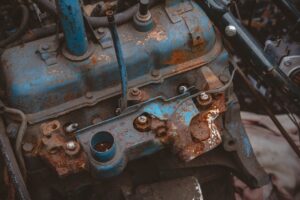
The valve cover sits on top of the cylinder head, covering the valvetrain. A rubber or cork gasket seals the junction between the cover and the head. Over time — accelerated by heat cycling, age, and on some engines, inadequate oil change intervals that leave acidic degraded oil baking against the gasket — the rubber hardens, shrinks, and loses its ability to conform to the mating surfaces.
The signature of a valve cover gasket leak: oil residue on the outside of the engine, usually visible running down the side of the engine block. On inline engines, the valve cover sits on top — oil drips straight down. On V6 and V8 engines with two cylinder heads, either or both covers can leak, and oil often runs down the back of the engine toward the firewall where it is less visible. The most critical risk from a valve cover gasket leak: on engines where the exhaust manifold runs below the valve cover, dripping oil contacts a surface that reaches 800°F to 1,200°F at operating temperature. This produces a burning oil smell, bluish smoke from the engine bay, and in severe cases — fire risk. It should not be ignored even if the oil loss rate is slow.
Valve cover gasket replacement is a legitimate DIY repair on most four-cylinder and many V6 engines — the cover is accessible and the job requires basic tools. Parts cost $15 to $80 for the gasket. Shop labor: $150 to $400 depending on engine accessibility. On some V8 engines with tight engine bays, the rear valve cover can require several hours of additional component removal — confirm accessibility before committing to DIY. Keep an eye on car smells like burning oil — that burning smell from engine bay is almost always valve cover oil dripping on exhaust.
2. Oil Drain Plug or Drain Plug Washer — The $5 Fix
The drain plug is removed at every oil change to empty the old oil. Most drain plugs use a crush washer — a soft metal ring that deforms under torque to create a tight seal. After a certain number of compression cycles, the washer no longer crushes further and loses its sealing ability. A worn drain plug washer produces a slow drip that is directly underneath the drain plug location — the very lowest point of the oil pan.
A drain plug that has been overtightened has stripped threads — either in the plug itself or in the oil pan. Overtightening is extremely common when shops use air impact guns without torque limiting. A drain plug with stripped threads cannot seal correctly and leaks regardless of how tightly it is installed. The repair for stripped oil pan threads can range from a thread repair insert ($15 DIY) to oil pan replacement ($300 to $600) depending on severity. The prevention: always torque the drain plug to specification — typically 20 to 30 ft-lbs — not “as tight as possible.”
The cheapest fix on this entire list: if the leak started after the last oil change, check the drain plug first. Hand-tighten it and add a quarter turn with a wrench. If the drain plug washer was not replaced — buy a new one for $2 to $5 at any auto parts store and replace it at the next oil change. This genuinely resolves a significant number of oil leaks that drivers spend money diagnosing.
3. Oil Pan Gasket
The oil pan bolts to the bottom of the engine block, and a gasket seals the junction. On most modern engines, this is a formed rubber gasket or a silicone sealant bead rather than a traditional flat gasket. Oil pan gasket failure produces a leak along the edges of the pan — oil seeps out and collects at the lowest point, dripping to the ground from the pan’s bottom edge.
Oil pan gasket failure is more common on high-mileage engines where the rubber has hardened from age and repeated heat cycling, and on vehicles where the engine has been run with degraded oil that chemically attacks rubber gaskets. It is also common after impact damage — a speed bump, road debris, or a low-clearance situation that contacted the oil pan — even if the pan itself was not visibly damaged, the impact can loosen the gasket seal.
The repair involves draining the oil, removing the oil pan, cleaning both surfaces thoroughly, and reinstalling with a new gasket or fresh silicone sealant. Shop cost: $200 to $500 depending on accessibility. On some vehicles with low ground clearance, subframe components obstruct the pan and significantly increase labor time. The oil pan gasket should always be replaced when the pan is removed for any other reason — it is inexpensive insurance against a future leak.
4. Oil Filter — Leaks Most Often After an Oil Change
An oil filter that is not tightened correctly, cross-threaded, or installed with the old gasket still stuck to the engine block (the “double gasket” problem) will leak immediately after an oil change. This is one of the most common causes of an oil leak that appears specifically after a recent oil change — and one of the easiest to diagnose and fix.
The double gasket problem: when a spin-on oil filter is removed, the rubber gasket on its top should come off with it. Occasionally the old gasket sticks to the engine block’s filter mount. If the installer does not notice it, the new filter goes on over the stuck old gasket — two gaskets instead of one. The combined thickness prevents the new filter from seating correctly. The result is a filter that seems tight but leaks from its base under oil pressure. Always inspect the filter mount surface after removing a used filter to confirm the old gasket came off with it.
Oil filter leak repair: with the engine cold, tighten the filter an additional three-quarter turn by hand if it is a new installation leak. If the filter will not stop leaking or was incorrectly installed — remove it, inspect for double gasket, reinstall correctly. Hand-tight plus three-quarter turn is the standard installation torque for most spin-on filters. Never use a wrench to tighten a spin-on filter during installation — only use a filter wrench for removal.
5. Front or Rear Crankshaft Seal
The crankshaft extends out of the engine block at both ends — the front to drive the timing components and serpentine belt, and the rear to connect to the transmission through the flywheel. At each exit point, a lip seal presses against the rotating crankshaft and prevents oil from escaping along the shaft. These seals last for many years but eventually harden and lose their ability to maintain contact with the rotating crankshaft surface.
A front crankshaft seal leak is visible as oil spray or seepage at the front of the engine, often contaminating the serpentine belt. Oil on the serpentine belt causes it to slip, squeal, and wear prematurely — this is why a front seal leak that is left unaddressed often results in a belt replacement alongside the seal work. On engines with timing belts (rather than chains), oil from a leaking front seal can saturate and destroy the timing belt, turning a $300 seal job into a $800 timing belt job. The seal and belt should always be inspected together.
The rear main seal is where the crankshaft exits toward the transmission. A leak here produces oil at the very back of the engine, often visible only by looking between the engine and transmission from below. Because accessing the rear main seal requires separating the engine from the transmission — a significant labor operation — this is the most expensive common oil leak. Shop cost: $600 to $1,500. On high-mileage vehicles, the economics of rear main seal repair need to be weighed against the vehicle’s value.
6. Camshaft Seals
Modern engines have one or more camshafts, each of which exits the cylinder head at one or both ends through a lip seal. Camshaft seal failure produces oil seepage at the front of the cylinder head, often running down the timing cover area and pooling in the valley between the engine and timing cover. On engines with timing belts, a leaking camshaft seal represents a genuine risk — oil saturating the timing belt causes it to fail prematurely and potentially without warning.
Camshaft seal replacement typically requires timing belt or timing chain cover removal to access. For this reason, it is almost always performed as part of a timing belt service — the labor to access the seal is already accounted for in the timing service. If your vehicle has a timing belt due for replacement and a camshaft seal that is beginning to seep, do both simultaneously. Camshaft seal parts cost $5 to $20 each; the labor to replace them independently can reach $400 to $800 on inaccessible engines.
7. Clogged PCV Valve Causing Crankcase Pressure
The Positive Crankcase Ventilation valve routes crankcase gases — blowby from combustion that passes the piston rings — back through the intake system to be burned. When the PCV valve clogs, these gases cannot exit the crankcase. Pressure builds. That pressure forces oil out through every seal and gasket in the engine simultaneously — the path of least resistance changes and multiple leaks appear at the same time in different locations.
The diagnostic signature of a clogged PCV valve causing oil leaks: multiple simultaneous leaks from different locations that appeared at roughly the same time, oil being pushed into the air filter box from the breather hose, or oil seeping from the dipstick tube. The PCV valve itself costs $5 to $25 and replaces in minutes on most engines — it simply pulls out of a rubber grommet or unscrews from the valve cover. This is one of the most overlooked causes of multi-location oil leaks and one of the cheapest fixes on the list.
Check your oil level when diagnosing multiple simultaneous oil leaks. If the oil level is normal but leaks are appearing everywhere — PCV system is the first place to look. If oil level is significantly low from the leaks, address the oil level first (see our how to check engine oil level guide) then diagnose the PCV system.
8. Overfilled Oil
Too much oil in the engine creates excess crankcase pressure — the crankshaft whips through the oil in the pan, aerating it into foam and creating pressure spikes that exceed what seals and gaskets are designed to handle. The result is oil being forced out through seals and gaskets that were functioning correctly before the overfill. This is why overfilling oil is not a minor issue. The damage pattern: oil appearing at multiple locations simultaneously, dipstick reading above the MAX mark, and the leaks clearing up once excess oil is removed.
The Cardboard Test — Do This Before Anything Else
This takes five minutes and gives more useful diagnostic information than most paid inspections. Slide a large piece of clean cardboard or white paper under the entire engine bay at night. Drive the car normally the next day, park over the cardboard in the same position, and leave it overnight. The next morning, the cardboard shows you exactly where the leak originates — the position of the stain on the cardboard corresponds to the position of the leak source on the engine.
One refinement: clean the engine underside with a rag before the cardboard test. Oil residue that has accumulated over months of slow leaking runs and distributes itself across the underside of the engine, making it hard to pinpoint the actual source. A clean engine and fresh cardboard gives you a clear picture of where fresh oil is actively escaping. For very slow leaks, UV dye injected into the oil and a UV blacklight (available as a kit for $15 to $30 at auto parts stores) makes the leak location glow visibly even when it is otherwise invisible to the eye.
Is It Safe to Drive with an Oil Leak?
| Leak Severity | Oil Loss Rate | Safe to Drive? | Action |
|---|---|---|---|
| Slow seep — spots on ground, no visible drip | Less than 1 quart per 1,000 miles | ⚠️ Yes — with monitoring | Check oil weekly. Fix within the month. |
| Moderate drip — drops while parked | 1–2 quarts per 1,000 miles | ⚠️ Short distances only | Check before every drive. Schedule repair urgently. |
| Active drip — drops while running | 1–2 quarts per day | 🔴 Not recommended | Do not drive more than necessary. Repair immediately. |
| Heavy leak — visible stream or large puddle | Over 1 quart per 100 miles | 🚨 Do not drive | Stop engine. Check oil. Tow if needed. |
| Oil on exhaust — visible smoke from engine | Any rate | 🚨 Fire risk | Stop and address immediately — fire risk is real. |
| Oil light on while driving | Critical — level critically low | 🚨 Pull over now | Stop engine immediately. Check and add oil before restarting. |
Stop-Leak Additives — The Honest Assessment
Stop-leak products are one of the most debated topics in automotive repair. Here is the honest picture — not the marketing version and not the reflexive mechanic dismissal either.
When stop-leak additives genuinely work: On slow seeps from rubber seals and gaskets that have hardened with age. The active ingredient in most automotive stop-leak products is a rubber conditioner — typically a blend of petroleum distillates — that causes hardened rubber seals to swell slightly and regain some flexibility. If the seal has hardened but is structurally intact, the conditioner can restore enough sealing ability to stop a slow weep. Products like Bar’s Leaks Engine Oil Stop Leak and BlueDevil Oil Stop Leak have legitimate success rates on minor valve cover and crankshaft seal seeps in high-mileage vehicles.
When stop-leak additives do not work: On a drain plug that is loose or has a worn washer — that is a mechanical problem requiring a mechanical solution. On an oil filter that is cross-threaded or double-gasketed. On a cracked oil pan or severely damaged gasket where the gap is too large for rubber conditioner to bridge. On a rear main seal in advanced failure. Stop-leak is not a permanent solution for any mechanical failure and should never substitute for proper repair when the leak is significant.
Risk of stop-leak additives: Low when used as directed on minor seeps. The primary concern — that additives clog oil passages — is largely unfounded with quality products used at correct dosage. The actual risk is drivers using stop-leak to delay a necessary repair, during which the continued (or worsening) oil loss causes engine damage. Use it as a temporary measure while arranging proper repair, not as a permanent solution.
Repair Cost Complete Guide
| Repair | DIY Cost | Shop Cost | Difficulty |
|---|---|---|---|
| Drain plug washer replacement | $2–$8 | $20–$50 | Easy |
| Oil filter replacement (if leaking) | $8–$20 | $30–$70 (with oil change) | Easy |
| PCV valve replacement | $5–$25 | $50–$150 | Easy |
| Oil filler cap seal | $5–$20 | $30–$80 | Easy |
| Valve cover gasket (4-cylinder) | $15–$60 parts | $150–$350 | Moderate |
| Valve cover gasket (V6/V8 — each) | $25–$80 parts | $200–$500 | Moderate–Hard |
| Oil pan gasket | $20–$80 parts | $200–$500 | Moderate |
| Front crankshaft seal | $10–$40 parts | $300–$700 | Hard |
| Camshaft seal | $5–$20 parts | $250–$600 | Hard |
| Timing cover gasket | $30–$100 parts | $400–$900 | Hard |
| Rear main seal | $15–$50 parts | $600–$1,500 | Very Hard |
| Oil cooler line/adapter | $20–$80 parts | $200–$500 | Moderate |
Frequently Asked Questions
What causes a car to leak oil?
Car oil leaks come from eight main sources: failed valve cover gaskets (most common), a loose or worn drain plug washer (cheapest fix), a leaking oil filter (common after oil changes), oil pan gasket failure, front or rear crankshaft seal failure, camshaft seal failure, a clogged PCV valve causing crankcase pressure that forces oil through seals, and overfilled oil creating excess internal pressure. The location of the puddle under the car — front, center, or rear — narrows down which component is failing before any inspection begins.
Is it safe to drive with an oil leak?
A slow seep that loses less than one quart per 1,000 miles is generally manageable with weekly oil level monitoring while the repair is arranged. An active drip that produces drops while parked means repair is urgent — do not drive more than necessary. Any oil leak that allows the oil pressure warning light to illuminate means stop the engine immediately — oil level has dropped to a critical point and continued driving causes permanent engine damage within minutes. Oil on exhaust components represents a fire risk and should be addressed immediately regardless of leak rate.
How do I find where my car is leaking oil?
The cardboard test is the most reliable home method: clean the underside of the engine, slide cardboard under the engine bay overnight, and note the puddle position the next morning. Front puddles point to front seals, valve covers, or timing components. Center puddles point to the oil pan or drain plug. Rear puddles between the engine and transmission point to the rear main seal. For very slow or intermittent leaks, a UV dye kit injected into the oil and a UV blacklight makes the leak glow visibly even when otherwise invisible.
Can I drive my car if it’s leaking a lot of oil?
No. A heavy oil leak — visible stream, large puddle, or loss of more than one quart over 100 miles — means the oil level is dropping rapidly. Driving with critically low oil causes bearing failure within minutes at operating temperature. Stop the engine, check the oil level with the dipstick, and add oil if needed to bring the level to the safe range. Drive only to the nearest shop for repair or call a tow truck. Continuing to drive a heavily leaking car is the fastest way to convert a $500 gasket repair into a $5,000 engine replacement.
How much does it cost to fix an oil leak?
Oil leak repair cost ranges from free (tightening a loose oil filter) to $1,500 or more (rear main seal replacement). The most common repairs fall in the middle: valve cover gasket replacement runs $150 to $400 at a shop, oil pan gasket runs $200 to $500, and drain plug washer replacement is $20 to $50. The exact cost depends on which component is leaking, vehicle make and model, and how accessible the component is. Getting the location identified correctly before authorizing any repair prevents spending money on the wrong component.
Related Guides
After identifying and fixing an oil leak, check your oil level and condition immediately using our engine oil level check guide. If the oil smells burnt or looks contaminated alongside the leak, our guide on car smells like burning oil covers what oil contact with hot engine components does and what to watch for. For understanding how quickly low oil damages the engine after a significant leak, see what engine oil does inside your engine — particularly the section on how fast bearing damage begins without adequate lubrication. And if an oil leak led to an oil pressure warning light, our signs your car needs an oil change guide covers all the dashboard and dipstick indicators of oil system stress.