Car Squeaks When Braking: 7 Causes — Is Yours Normal or a Warning?
Car squeaks when braking? Morning squeak that clears after a few stops is surface rust — completely normal. A squeak every single stop means the brake pad wear indicator is touching the rotor — replacement is overdue. A squeak only when braking lightly but not hard means glazed pads. Each pattern is a different cause requiring a different response. Here is how to tell which one you have.
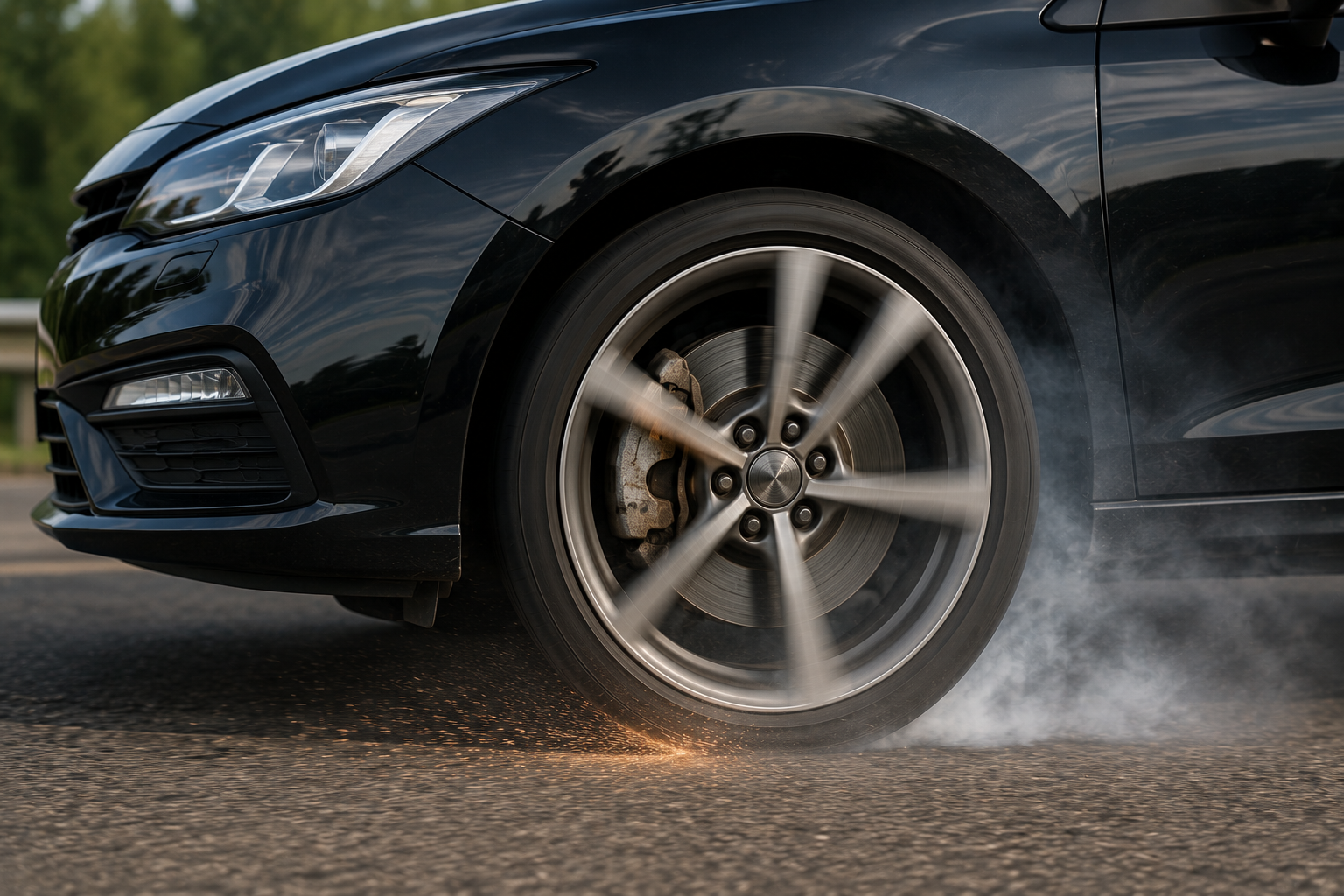
A car that squeaks when braking is not necessarily telling you the brakes are failing. The pattern of the squeak — when it happens, how long it lasts, and what makes it stop — tells you which of seven different causes you are dealing with. Morning squeak on the first few stops that disappears: surface rust on rotors, completely normal. Squeak every stop, gets louder over weeks: wear indicator touching rotor, replacement overdue. Squeak only under light braking but not hard stops: glazed pads or rotors. Squeak plus vibration through the pedal: warped rotors. Each scenario is different, and treating them all as “worn brakes” leads to unnecessary repairs on perfectly functional brake systems.
Brake squeak is one of those sounds that sends drivers straight to the mechanic out of worry — and in roughly half of cases, the mechanic tells them the brakes are fine and charges a diagnostic fee for the information. The other half genuinely need brake attention. The difference between these two outcomes almost always comes down to the pattern of the squeak, which is something you can assess in your own driveway before spending money on a shop visit. This guide gives you the framework.
The 60-Second Pattern Diagnostic
Answer these three questions about your squeak before reading the individual causes below. Your answers will narrow the cause significantly.
| Question | Your Answer | What It Points To |
|---|---|---|
| When does it squeak? | Only on first few stops after overnight parking | Surface rust — normal |
| Every single time you brake | Wear indicator, glazed pads, or debris | |
| Only when braking lightly | Glazed pads or rotors | |
| Only when braking hard | Semi-metallic pad compound, less common cause | |
| How long has it been happening? | Appeared this morning — new today | Surface rust after rain or sitting |
| Started after new brake pads | Bedding-in period or wrong pad compound | |
| Gradually worsening over weeks | Wear indicator approaching danger threshold | |
| Suddenly appeared and is consistent | Debris in caliper, worn pads, hardware failure | |
| What else do you notice? | Nothing else — just the sound | Likely minor — surface rust or glazing |
| Pulling to one side when braking | Uneven pad wear or seized caliper | |
| Vibration through brake pedal | Warped rotors — related but different issue | |
| Smell of burning or heat from wheel | Seized caliper — urgent |
Squeak vs Squeal vs Grind — Know the Difference
These three sounds are often used interchangeably but represent very different conditions with very different urgency levels.
| Sound | Frequency / Character | Typical Cause | Urgency |
|---|---|---|---|
| Squeak | High pitched, brief — one note | Rust, glazing, wear indicator, debris | 🟡 Diagnose by pattern |
| Squeal | High pitched, sustained — longer duration | Wear indicator contact, semi-metallic compound | 🟠 Inspect soon |
| Grind / Scrape | Harsh, metallic, lower frequency | Metal on metal — pads fully worn through | 🔴 Immediate — causing damage |
| Chirp | Very brief, rapid tick-like | Debris caught between pad and rotor | 🟡 Monitor — often self-clears |
| Clunk + squeak | Mechanical thud followed by squeak | Worn brake hardware or caliper movement | 🟠 Inspect hardware |
The 7 Real Causes of Brake Squeak
1. Morning Surface Rust — The Normal Squeak Everyone Experiences
This is the brake squeak cause that sends the most people to mechanics unnecessarily. Here is what is actually happening. Brake rotors are made of cast iron. Cast iron rusts. When a car sits overnight — especially after rain, high humidity, or morning dew — a thin layer of iron oxide forms on the rotor surface. On the first few brake applications the next morning, the brake pads wipe this rust layer off the rotor. During this brief wiping process, the friction interface between pad and rotor changes momentarily, and the rotor may resonate at an audible frequency — you hear a squeak or brief squeal.
The diagnosis is straightforward: the squeak appears on the first one to four stops after the car has been parked for several hours, and disappears completely after that. No squeak during the rest of the drive. If the car has been parked since yesterday evening and squeaks on the first stop this morning but drives silently for the rest of the day — that is surface rust removal and it is completely normal behavior, not a brake problem.
This squeak is more pronounced after rain or dew, on cars that are parked outside rather than garaged, and in humid climates. It is more common with certain pad compounds — particularly organic and ceramic pads which have harder contact faces — than with semi-metallic pads. There is no fix required. If it bothers you, the only reduction comes from using semi-metallic pads (which are more aggressive at clearing rust quickly) or simply accepting that it is normal.
2. Brake Pad Wear Indicator — The Warning Squeak
Every brake pad sold in North America, Europe, and most other markets includes a wear indicator — a small metal tab attached to the pad backing plate. This tab is positioned precisely so that when the brake pad friction material wears down to the minimum safe thickness (approximately 2 to 3mm), the metal tab contacts the rotor surface during braking. The metal-on-rotor contact produces a high-pitched squeal that is intentionally designed to be audible at highway speeds with windows up and radio on.
The wear indicator squeak has a specific pattern: it is present on every stop, not just the first one in the morning. It is consistent — not intermittent. It does not go away after warming up. It typically appears during braking and stops when you release the brake pedal (because the indicator tab lifts off the rotor when brake pressure releases). As the pads continue to wear, the indicator may contact the rotor more consistently and the squeal transitions from intermittent to constant — even without applying the brakes.
What to do: schedule brake pad replacement. The wear indicator is not a “check this in a few months” warning — it is the final warning before the pad wears completely through to the metal backing plate, at which point the metal-on-rotor contact becomes grinding rather than squealing, and the rotor begins to be damaged with every stop. A $200 brake pad replacement at this stage costs $400 to $600 once rotor damage from delayed action is included. See our guide on how long brake pads last for the full replacement timeline.
3. New Brake Pad Bedding-In — Expected Squeak After a Fresh Install
New brake pads — particularly performance compounds or premium aftermarket pads — frequently squeak during the first 100 to 300 miles of use. This is not a defect. Brake pad compounds require a bedding-in process: the resin binders in the pad compound need to heat up and be deposited evenly onto the rotor surface in a thin, uniform transfer film. Until this transfer layer forms, the pad-to-rotor interface is not fully optimized, and the pad may resonate during braking.
Bedding-in procedure accelerates this process: from approximately 30 mph, apply moderate brake pressure to reduce speed to 5 mph without stopping completely. Allow 30 seconds for the brakes to cool. Repeat 6 to 10 times. Then perform 2 to 3 more stops from 50 mph using firm but not emergency-level brake pressure. This controlled heat cycle deposits the transfer film evenly and typically resolves new pad squeak significantly. After bedding-in, avoid heavy extended braking for the next 200 miles.
If new pads continue to squeak significantly beyond 500 miles of normal use, the cause is more likely an incompatibility between the pad compound and rotor material, failure to replace rotors that had an existing film from old pads, or incorrect pad installation (missing shims, anti-squeal compound not applied).
4. Glazed Brake Pads or Rotors — Squeak Only at Light Brake Application
Brake pad glazing occurs when pads are exposed to sustained high heat — from prolonged light braking on a long downhill, from a seized caliper that creates constant drag, or from a period of aggressive use without adequate cooling. The heat cures and hardens the surface layer of the pad compound, creating a smooth, vitrified surface rather than the slightly abrasive texture that creates effective braking friction.
Glazed pads have a characteristic squeak pattern: the squeak appears primarily at light to moderate brake application and may diminish or disappear under hard braking (when higher pressure overcomes the glazed surface). Braking distance may increase slightly — the pads are less effective than they should be. Rotor surfaces can also glaze from the same heat exposure, creating a mirror-like surface visible on the rotor face.
Mild glazing can sometimes be corrected by performing a series of firm braking stops from highway speed to abrade the glazed layer off — the same bedding procedure described above. Significant glazing requires removing the pads and scuffing the pad surface with 80-grit sandpaper until the fresh compound material beneath is exposed. Rotors with visible glazing should be resurfaced or replaced. If a seized caliper caused the glazing, addressing only the pads without fixing the caliper will result in immediate re-glazing.
5. Semi-Metallic Pad Compound — Cold Weather Squeak
Semi-metallic brake pads — which contain 30 to 65 percent metal particles (steel, copper, iron) — are more prone to squeaking than organic or ceramic compounds, particularly in cold weather conditions. The metal content that makes them effective in high-temperature and high-performance applications makes them stiffer and more resonance-prone when cold. Many drivers who switched from original-equipment organic or ceramic pads to aftermarket semi-metallic pads experience increased brake noise, particularly on cold mornings, and interpret it as a brake problem when it is actually a pad compound characteristic.
If your brake squeak appeared after a recent brake pad replacement, identify what compound was installed. If semi-metallic pads were installed on a vehicle that previously had ceramic pads — and the noise is particularly pronounced in the morning or cold weather — the compound difference is likely the explanation. Application of anti-squeal compound (brake quiet) to the back of the pad, and fresh anti-squeal shims, can reduce but may not eliminate the compound-related noise. Switching back to ceramic pads at the next service is the definitive solution if the noise is unacceptable.
6. Debris Between Pad and Rotor
Small stones, grit, or road debris can become lodged between the brake pad and rotor surface. The debris creates a brief, sharp squeak or chirp on each brake application as it contacts the rotor at the same rotational point. This sound is typically very rapid and brief — almost a tick rather than a squeak — and may be more prominent at lower speeds where the rotor is turning slowly enough that individual contact points are distinguishable.
Debris-caused brake noise is usually self-resolving. Normal braking wears or displaces the debris within a few miles. If the noise persists beyond 50 miles of normal driving, the debris is lodged in a position where normal braking is not clearing it — at which point the wheel needs to be removed and the caliper and pad inspected for lodged material. Do not leave debris in the brake assembly indefinitely — repeated contact can score the rotor surface.
7. Missing or Worn Anti-Squeal Hardware
Brake pads are held in the caliper bracket by clips, pins, and shims that serve multiple purposes — they retain the pad in position, allow controlled movement during application and release, and dampen resonance that would otherwise translate into audible squeak. These hardware components are often overlooked during brake pad replacement and reused from the original installation rather than replaced.
Brake hardware should be replaced with every brake pad replacement. The cost of a hardware kit is $15 to $30 and takes minutes to install. Reusing worn or corroded hardware on new pads is one of the most common causes of brake squeak on fresh installations. Worn hardware clips allow the pad to move slightly in the caliper bracket rather than being held firmly — this micro-movement during braking creates resonance. Anti-squeal shims — thin metal or composite plates between the pad back and caliper piston — prevent caliper vibration from exciting the pad into resonance. Shims that are missing, worn through, or not seated correctly remove this damping function.
Is It Safe to Drive? — Urgency by Squeak Type
| Squeak Type | Safe to Drive? | Action Timeline |
|---|---|---|
| Morning squeak — first 1–4 stops only, then silent | ✅ Yes — completely normal | No action needed |
| New pad squeak — within first 300 miles of installation | ✅ Yes | Perform bedding-in procedure |
| Consistent squeak on every stop — new this week | ⚠️ Monitor | Inspect pads within 2 weeks |
| Consistent squeak every stop — progressively louder over weeks | ⚠️ Inspect soon | Brake inspection this week |
| Squeak changed to squeal or grinding | 🔴 Urgent | Brake service within days |
| Squeak + pulling to one side | 🔴 Inspect soon | Caliper and pad inspection |
| Squeak + burning smell from wheel | 🚨 Stop driving | Seized caliper — tow to shop |
| Grinding — not squeak | 🚨 Urgent | Metal on metal — repair immediately |
Can You Reduce Brake Squeak Without Replacing Pads?
For squeak caused by glazing, hardware issues, or compound resonance — yes, with limitations.
- Brake quiet / anti-squeal compound: Applied to the back face of the brake pad (never the friction surface), this high-temperature damping compound reduces resonance transmission from the caliper piston to the pad. Effective for hardware-related squeak and compound resonance. Does not help surface rust squeak or wear indicator squeak. Cost: $5 to $10 per tube at any auto parts store.
- Brake cleaner spray: Removes brake dust, light glazing, and debris from pad and rotor surfaces. Spray directly on the rotor and pad while the wheel is installed (with wheel protection). Can reduce noise from light surface contamination. Not effective for mechanical wear-related squeak. Cost: $5 to $10 per can.
- Bedding-in procedure: Effective for new pad squeak and mild glazing — see the procedure in Cause 3 above.
- Hardware replacement: If the squeak appeared on an older brake installation with original hardware, replacing clips, shims, and pins without replacing the pads themselves sometimes resolves the noise if the pads have adequate remaining thickness.
Frequently Asked Questions
Why does my car squeak when I brake?
Car brake squeak has seven main causes: surface rust on rotors (normal — first stops only after overnight parking), worn brake pad wear indicators (consistent squeak every stop — pads need replacement), new pad bedding-in (normal for first 300 miles), glazed pads or rotors (squeak mainly at light brake pressure), semi-metallic compound noise (more common in cold weather), debris between pad and rotor (brief chirp, usually self-clears), and missing or worn anti-squeal hardware. Identifying the pattern of the squeak — when it happens and what makes it stop — tells you which cause you have.
Is it normal for brakes to squeak?
Yes — in specific circumstances. A brief squeak on the first one to four stops after overnight parking is completely normal surface rust being wiped from the rotor face. A squeak after new brake pad installation that fades after 200 to 300 miles is normal bedding-in. What is not normal: a persistent squeak that occurs on every stop and does not improve after warm-up, any squeak that is progressively getting louder over days or weeks, any squeak accompanied by pulling, vibration, or burning smell, or any grinding or scraping sound.
Will brake squeak go away on its own?
Surface rust squeak disappears after the first few stops as the pad wipes the rust off — this goes away every time by itself. Debris-related squeaks usually self-clear within 50 miles of driving. New pad bedding squeak reduces significantly after 200 to 300 miles. What does not go away on its own: wear indicator squeak (gets worse as pads wear further), glazing squeak (gets worse with time), and hardware-related squeak (stays constant until hardware is replaced). If a brake squeak has been present for more than two weeks and is consistent on every stop, it is not self-resolving.
How do I stop my brakes from squeaking?
The fix depends on the cause. Surface rust squeak requires no fix. New pad squeak is resolved by performing the bedding-in procedure — a series of moderate stops from 30 mph. Glazed pad squeak may be resolved by the same bedding procedure or light sanding of the pad face. Wear indicator squeak requires brake pad replacement. Hardware-related squeak is fixed by replacing clips, shims, and anti-squeal hardware and applying anti-squeal compound to the pad back. Compound-related noise from semi-metallic pads may require switching to ceramic pads for a permanent solution.
Related Guides
If brake squeak has progressed to grinding, our grinding noise when braking guide assesses exactly how much rotor damage has occurred and whether resurfacing or replacement is needed. For checking current brake pad thickness to determine whether replacement is overdue, see our brake pad lifespan guide including the visual inspection method through wheel spokes. And if braking is causing steering wheel shaking alongside the squeak, our car shakes when braking guide covers rotor warping diagnosis separately from pad wear.