How to Save Gas: 17 Proven Ways to Improve Fuel Economy (Gas at $4.50+)
With gas prices averaging $4.56 per gallon in May 2026 — the highest since 2022 — improving fuel economy is no longer optional. These 17 proven techniques can realistically save the average driver $400 to $900 per year at current prices. No modifications required. All of them work immediately.
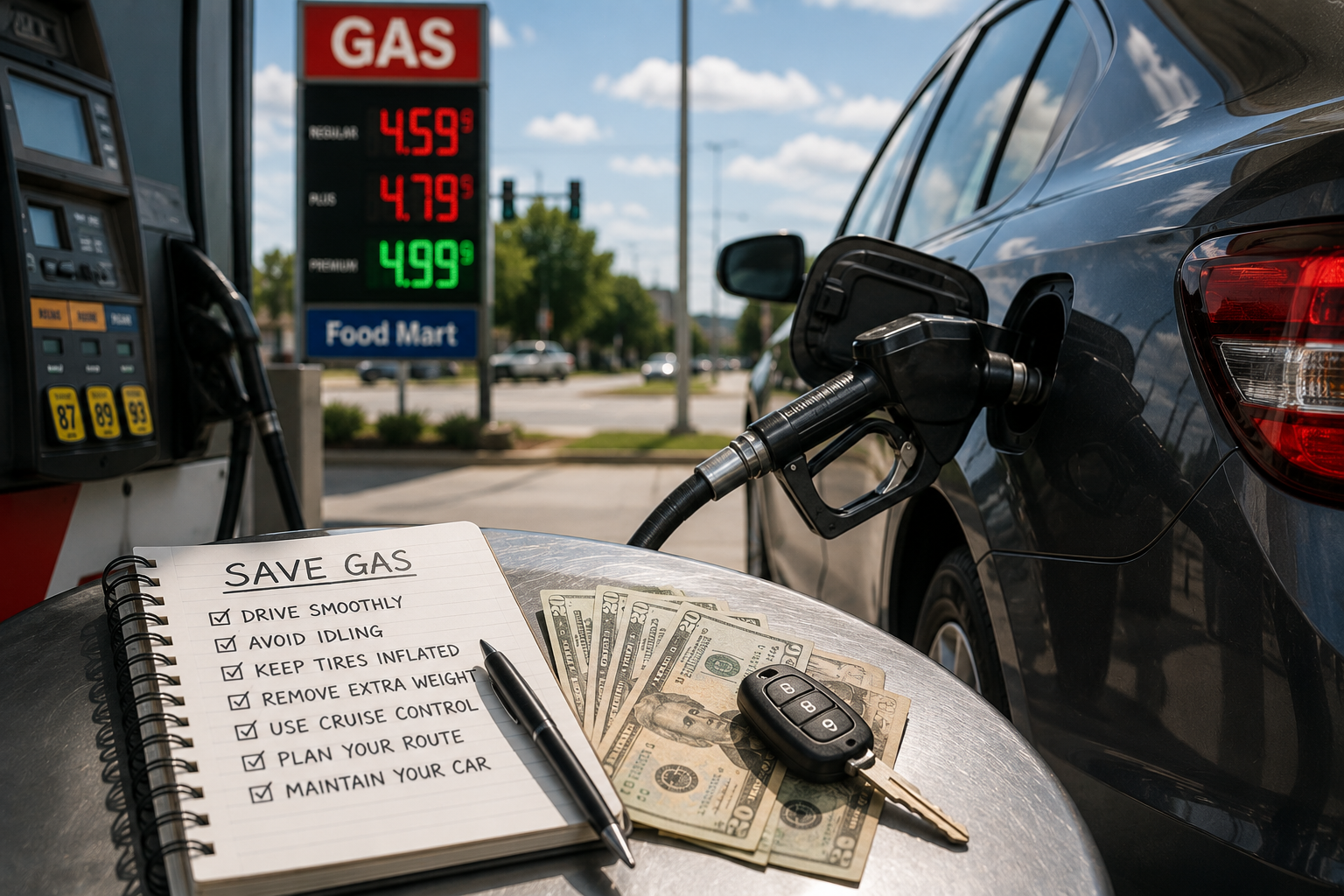
With the national average for a gallon of regular gasoline sitting above $4.50 in May 2026 — the highest level since 2022 — the math on fuel economy has changed. Every 1 MPG improvement in fuel economy saves approximately $220 per year at current prices for a driver covering 12,000 miles annually. The 17 techniques in this guide collectively represent 15 to 25 percent improvements in real-world fuel economy for most drivers. That translates to $400 to $900 per year in fuel savings at current pump prices — without any modifications, premium products, or significant lifestyle changes.
Gas prices above $4.50 change the calculation on everything from how aggressively you accelerate to whether that extra errand is worth the trip. The good news: fuel economy responds dramatically to driving behavior and basic maintenance — two areas where most drivers have significant untapped savings. This guide covers both, starting with the techniques that deliver the largest immediate returns and working down to the marginal gains that compound over a full year of driving.
The Real Numbers — What Fuel Economy Improvement Is Worth in 2026
| MPG Improvement | Annual Savings (12,000 miles, $4.50/gal) | Annual Savings (15,000 miles, $4.50/gal) |
|---|---|---|
| 1 MPG improvement (e.g., 28 → 29 MPG) | $55 | $69 |
| 2 MPG improvement | $110 | $138 |
| 5 MPG improvement | $263 | $329 |
| Driving behavior alone (10–15% improvement) | $350–$530 | $440–$663 |
| All techniques combined (15–25%) | $450–$900 | $560–$1,125 |
Group 1 — Driving Behavior (Biggest Impact, Free, Immediate)
1. Accelerate Gradually — The Single Biggest Fuel Economy Factor
Hard acceleration from stops is the most fuel-consuming driving behavior that most drivers can immediately change. At full throttle, a typical gasoline engine operates at roughly 15 to 20 percent thermal efficiency — meaning 80 to 85 percent of the fuel energy becomes waste heat rather than forward motion. At light to moderate throttle, efficiency climbs to 25 to 35 percent. The difference between flooring the gas from every stop and accelerating smoothly over 10 to 15 seconds is measurable — typically 10 to 20 percent more fuel per acceleration event.
The practical technique: aim to reach the speed limit in about 15 seconds from a stop, not 5. Use the 5-second rule — take 5 seconds to reach 15 mph from a stop. This keeps throttle in the moderate range where efficiency is highest. On highway on-ramps, accelerate smoothly to merging speed rather than flooring it — the fuel cost of a hard on-ramp acceleration is equivalent to a quarter mile of normal cruising.
2. Anticipate Stops and Coast to Decelerate
Every time you brake, you convert the kinetic energy your engine burned fuel to create into heat — wasted. Every time you accelerate after that stop, you burn more fuel to recreate the kinetic energy. Anticipating stops and coasting to decelerate preserves the vehicle’s momentum and reduces both fuel consumption and brake wear simultaneously.
The technique: look 12 to 15 seconds ahead — farther than most drivers watch. When you see a red light ahead, take your foot off the gas immediately and coast. Modern fuel-injected engines consume zero fuel when decelerating with your foot off the gas (fuel cut-off mode) — the engine’s own compression does the braking and fuel injection is suspended. You are getting genuine free deceleration. In city driving, anticipatory driving can improve fuel economy by 15 to 20 percent compared to reactive driving.
3. Drive at 55–60 MPH on Highways, Not 75+
Aerodynamic drag increases with the square of velocity. The difference in drag force between 60 mph and 75 mph is not 25 percent — it is 56 percent. The engine must overcome that drag to maintain speed, so fuel consumption increases proportionally. EPA testing shows that most vehicles achieve their best highway fuel economy at 45 to 55 mph. At 75 mph, fuel economy is typically 15 to 25 percent worse than at 60 mph.
| Highway Speed | Approximate Fuel Economy Penalty | Extra Cost Per Year (15,000 highway miles) |
|---|---|---|
| 55 mph | Baseline (best efficiency) | $0 extra |
| 60 mph | ~5% penalty | +$45/year |
| 65 mph | ~10% penalty | +$90/year |
| 70 mph | ~17% penalty | +$153/year |
| 75 mph | ~23% penalty | +$207/year |
| 80 mph | ~30% penalty | +$270/year |
At current gas prices, the driver doing 80 mph instead of 65 mph on a 15,000-mile-per-year highway commute is spending approximately $180 more per year on fuel for the same distance. The time saved at 80 versus 65 over 15,000 highway miles: about 42 hours. That is a fuel cost of about $4.30 per hour of time saved.
4. Use Cruise Control on Highways
Human drivers are inconsistent — speed drifts up and down by 3 to 5 mph around the target without the driver noticing. Each speed increase requires additional throttle input and fuel. Cruise control maintains a perfectly consistent speed, eliminating the constant small acceleration events that cost fuel. On flat highway sections, cruise control typically improves fuel economy by 7 to 14 percent compared to manual throttle control over the same distance.
Exception: hilly terrain. On roads with frequent grades, cruise control maintains speed up hills by applying more throttle — often more throttle than a human driver would use. On hilly routes, letting speed naturally drop slightly going uphill (and recover going downhill) while managing the throttle manually often beats cruise control for fuel economy. The rule: cruise control on flat roads, manual throttle on hilly terrain.
5. Eliminate Unnecessary Idling
An idling engine burns approximately 0.2 to 0.5 gallons per hour depending on engine size. At $4.50 per gallon, that is $0.90 to $2.25 per hour of idling — for zero forward progress. The old conventional wisdom that warming up a car by idling for 10 minutes on a cold morning is both incorrect for modern fuel-injected engines and expensive at current fuel prices.
Modern engines reach operating temperature faster through gentle driving than through stationary idling. A 30-second idle to allow oil to circulate is adequate for most modern vehicles in temperatures above 20°F. Extended warm-up idling wastes fuel, increases engine wear from operating with a cold-start rich mixture for longer than necessary, and produces more emissions. At a drive-through, waiting train, or prolonged stop of more than 60 seconds — turn off the engine.
6. Use A/C Strategically
The air conditioning compressor adds 5 to 25 percent load to the engine depending on the system, ambient temperature, and how hard it must work. At low highway speeds, the fuel penalty from running AC can equal or exceed the aerodynamic penalty of opening windows. At highway speeds above 50 mph, closing windows and running AC typically uses less fuel than the drag created by open windows at speed.
The fuel-efficient approach: at city speeds and below 45 mph, open windows instead of running AC when outdoor temperature and air quality permit. At highway speeds, use AC with windows closed. When parked in the sun, open doors briefly before entering to vent trapped hot air — this reduces how hard the AC must work to cool the cabin initially, reducing the startup fuel penalty. Park in shade when available to reduce initial cabin temperature.
Group 2 — Maintenance (Measurable Improvements from Correct Upkeep)
7. Keep Tires Properly Inflated
An underinflated tire has a larger contact patch with more rolling resistance — the tire deforms more with each revolution, requiring more energy to roll. The Department of Energy estimates that tires underinflated by 10 PSI reduce fuel economy by 3 to 4 percent. For a driver covering 15,000 miles at $4.50 per gallon getting 30 MPG, 4 percent better fuel economy saves approximately $90 per year — from a free monthly tire pressure check.
Use the pressure listed on the door jamb sticker — not the maximum pressure on the tire sidewall. Check pressures when cold (car parked for at least 3 hours or less than 1 mile driven). In summer, every 10°F increase in temperature adds approximately 1 PSI — tires that are correct in the morning may read slightly high in the afternoon heat. See our how to check tire pressure guide for the exact procedure.
8. Replace Air Filter on Schedule
A clogged air filter restricts airflow into the engine. The engine compensates by pulling harder against the restriction, consuming more fuel for the same power output. The EPA estimates that a new air filter can improve fuel economy by up to 10 percent on older carbureted engines and has a measurable but smaller effect (2 to 4 percent) on modern fuel-injected engines with closed-loop air-fuel management. At current gas prices, the $20 cost of a replacement air filter is recovered in fuel savings within 2 to 3 months on most vehicles.
9. Use the Correct Motor Oil Viscosity
Using a thicker oil than specified creates additional friction inside the engine. An engine specified for 0W-20 that is filled with 5W-30 runs with more viscous oil that the components must work slightly harder to move through. The fuel economy penalty from one viscosity grade too thick is typically 1 to 2 percent — small per tank but meaningful over a year. More importantly, manufacturers who specify 0W-16 or 0W-20 did so specifically because the fuel economy improvement at that viscosity was part of their EPA certification testing. See our guide on how often to change synthetic oil for the correct intervals and specifications.
10. Replace Spark Plugs at the Service Interval
Worn spark plugs with eroded electrodes fire inconsistently. Incomplete combustion means some fuel passes through unburned — fuel that was paid for but did not produce useful work. The EPA estimates that misfiring spark plugs can reduce fuel economy by up to 30 percent in severe cases, though a more typical worn-plug penalty is 2 to 4 percent. Replacing plugs at or before the service interval eliminates this waste entirely and is routine maintenance regardless of the fuel economy benefit.
11. Check and Maintain Wheel Alignment
Misaligned wheels point in slightly different directions from the vehicle’s direction of travel — creating a constant tire scrub that the engine must overcome as additional rolling resistance. Even mild misalignment (0.5 degrees of toe-out) increases rolling resistance measurably. The fuel economy penalty from significant misalignment is 2 to 5 percent, plus accelerated tire wear that costs additional money. Alignment should be checked annually and after any significant impact — curb strikes, large potholes, or any collision.
Group 3 — Trip Planning and Habits (Compound Savings)
12. Combine Errands into Single Trips
A cold engine uses significantly more fuel per mile than a warm one — during the first 5 to 10 minutes of driving, the engine operates with a fuel-rich cold-start mixture and is not yet at efficient operating temperature. Multiple short separate trips, each starting from cold, use dramatically more fuel than combining the same errands into one continuous trip where the engine stays warm throughout. If you have five separate errands, doing them consecutively saves the cold-start fuel penalty four times versus spreading them across the day.
13. Reduce Vehicle Load and Roof Cargo
The Department of Energy estimates that every 100 pounds of unnecessary weight reduces fuel economy by 1 to 2 percent. Items that live permanently in the trunk — sports equipment, tools, bags of salt — add weight that the engine carries every mile without benefit. Remove items you are not using on the current trip.
Roof cargo carriers deserve special attention. An empty roof cargo box (not carrying anything) adds 2 to 8 percent aerodynamic drag at highway speeds — the box creates turbulence even when empty. A loaded cargo box or roof-mounted bike rack at highway speed adds 10 to 25 percent drag. At $4.50 per gallon, a road trip with a loaded roof box versus none can cost $20 to $50 more in fuel for a 500-mile drive. Remove roof cargo equipment when not actively in use.
14. Use Gas Price Apps to Find Cheapest Fuel
With gas prices varying by $0.50 to $1.50 per gallon between stations in the same city — more in areas with multiple competing retailers — the difference between always stopping at the nearest station and using a price comparison app to find the cheapest station within a reasonable detour is significant. GasBuddy, Waze, and Google Maps all show current gas prices for nearby stations. A driver filling a 15-gallon tank who consistently finds gas $0.30 per gallon cheaper saves $4.50 per fill-up — approximately $135 per year at once-weekly fill-ups.
15. Use Grocery and Warehouse Club Fuel Rewards
Most major grocery chains — Kroger, Safeway, Giant, Stop & Shop — offer fuel rewards programs that accumulate per-gallon discounts based on grocery spending. Warehouse clubs — Costco, Sam’s Club — sell fuel at cost plus a small margin, typically $0.15 to $0.40 per gallon below retail. A family spending $600 per month on groceries at a store with a fuel rewards program can accumulate $0.10 to $0.30 per gallon in rewards on a significant percentage of their fill-ups. At current prices, this represents $100 to $300 per year in fuel savings without changing driving behavior at all.
16. Pay with Cash Where Accepted
Many gas stations charge $0.05 to $0.15 per gallon more for credit card transactions than cash — a practice that became more visible as fuel prices rose. At stations that post separate cash and credit prices, paying cash at every fill-up saves $0.08 to $0.15 per gallon. For a driver filling a 15-gallon tank weekly, this is $62 to $117 per year — entirely from a payment method choice, no driving behavior change required.
17. Consider Parking Orientation for Next-Day Departure
Parking your car with the hood facing east gives morning sun direct access to the engine bay — the engine warms slightly overnight from ambient heat, reaching operating temperature faster on the first cold-start of the day and spending less time in fuel-inefficient cold-start enrichment mode. This is a marginal effect but one that costs nothing to implement. More meaningfully, parking in shade during summer reduces interior temperature, which reduces the initial AC load when you return to the car — a measurable fuel saving on the first few minutes of each summer drive.
The Summer 2026 Gas Price Context
The national average for regular gasoline reached $4.56 per gallon in May 2026, more than $1.40 higher than the same period last year, driven primarily by the closure of the Strait of Hormuz affecting global oil supply. GasBuddy’s summer 2026 forecast predicts an average of $4.80 per gallon between Memorial Day and Labor Day — potentially testing the all-time high of $5.02 per gallon if the geopolitical situation extends into late summer. The typical car owner could pay $876 more in fuel costs in 2026 compared to 2025 at sustained current prices, according to analysis by Sen. Edward Markey’s office.
Against this backdrop, the 17 techniques in this guide — particularly the driving behavior changes in Group 1 — represent a meaningful and immediate financial response. Combining smooth acceleration, highway speed management, and proper tire inflation alone typically delivers 12 to 18 percent fuel economy improvement, translating to $400 to $700 in annual savings for an average driver at current prices.
Frequently Asked Questions
What is the best way to save gas?
The most effective way to save gas is to change driving behavior — specifically, accelerating gradually from stops instead of hard acceleration, anticipating traffic and coasting to decelerate rather than braking, and reducing highway speed from 75+ mph to 60 to 65 mph. These three behavioral changes alone typically improve real-world fuel economy by 12 to 20 percent. At current gas prices above $4.50 per gallon, that translates to $400 to $700 in annual savings for a driver covering 12,000 to 15,000 miles per year.
Does tire pressure really affect gas mileage?
Yes — significantly. The Department of Energy estimates that tires underinflated by 10 PSI reduce fuel economy by 3 to 4 percent. For a vehicle getting 30 MPG covering 15,000 miles at $4.50 per gallon, that is approximately $90 per year in additional fuel cost from underinflated tires alone. Checking and correcting tire pressure monthly takes about 5 minutes and is free at most gas stations and auto parts stores.
How much does AC affect fuel economy?
Running the air conditioning system reduces fuel economy by 5 to 25 percent depending on the ambient temperature, how hard the system must work, and vehicle speed. The penalty is highest at low speeds and in extreme heat. At highway speeds above 50 mph, the fuel cost of running AC is typically less than the aerodynamic drag of opening windows. Below 45 mph in mild temperatures, opening windows instead of running AC saves meaningful amounts of fuel.
Does premium gas improve fuel economy?
Only in vehicles that specifically require or recommend premium fuel — typically high-compression or turbocharged engines. Using premium fuel in a vehicle that requires regular provides zero fuel economy benefit and costs $0.30 to $0.60 per gallon more. Conversely, using regular fuel in a vehicle that requires premium causes the knock sensor to retard ignition timing, which reduces both power output and fuel economy — negating any cost savings from the cheaper fuel. Use the grade specified on the fuel door or in the owner’s manual, nothing higher or lower.
Related Guides
The maintenance items in this guide connect directly to our detailed service guides. For tire pressure — the free fuel economy improvement — see our complete tire pressure guide. For oil change intervals and correct viscosity that affects fuel economy, see our synthetic oil change guide. And for the full picture of every maintenance service that affects vehicle efficiency and reliability, our complete car maintenance schedule covers every interval from 3,000 to 100,000 miles.