Car Overheating? Do This Immediately (Step-by-Step Emergency Guide)
Car overheating? Do NOT open the hood or add coolant yet. Follow these 8 emergency steps in exact order to prevent engine damage — plus all causes, repair costs, and how far you can safely drive.
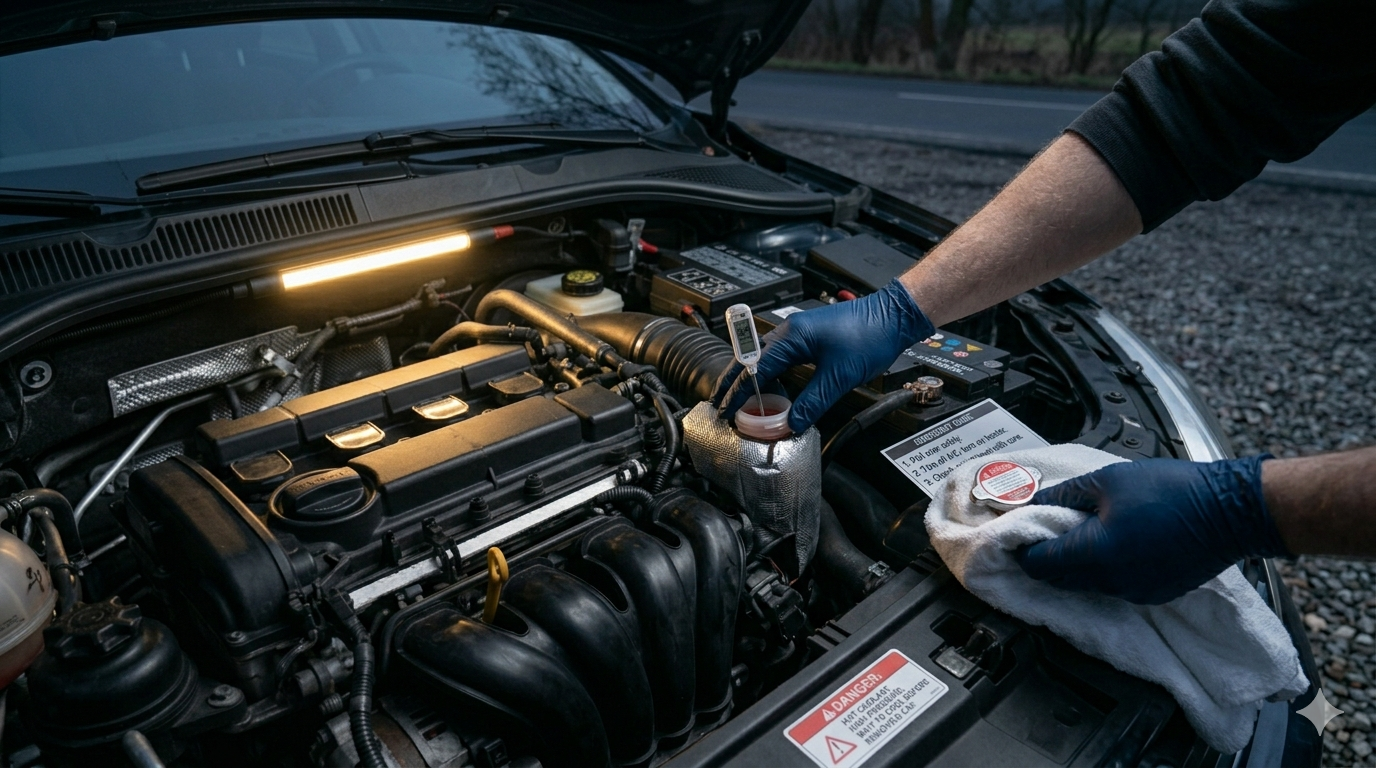
Car overheating: immediately turn OFF the AC, turn ON the heater full blast (draws heat from engine into cabin), safely pull over and stop the engine, wait at least 15 minutes before opening the hood — pressurized boiling coolant will spray out and cause burns if opened too soon. After cooling completely, check and add coolant, then drive directly to a shop watching the temperature gauge carefully. Never open the radiator cap on a hot engine.
Your temperature gauge just hit the red zone. Steam is rising from under the hood. You have about 60 seconds to make the right decisions before this becomes a $3,000–$8,000 engine repair. A car overheating is one of the most time-critical mechanical emergencies on the road — and most drivers make at least two costly mistakes in the first 2 minutes. This guide tells you exactly what to do, in the exact order, and what absolutely not to do.
Do This RIGHT NOW — 8 Emergency Steps in Order
- Turn OFF the air conditioning immediately. AC puts significant extra load on the engine. Turn it off the moment you see the temperature gauge rising. This alone can sometimes buy you 3–5 minutes of additional safe driving time.
- Turn the heater ON — full blast. This sounds backwards but it works. Your car’s heater is essentially a second small radiator. Turning it on full heat draws heat away from the engine and into the cabin. Roll down your windows. This trick can drop engine temperature by 10–15°F.
- Turn on your hazard lights and move to safety. Signal and safely maneuver to the right shoulder, a parking lot, or any safe location off the road.
- Turn off the engine. Once safely stopped, turn the engine off immediately. Do not leave it idling.
- Do NOT open the hood for at least 15 minutes. A pressurized cooling system at 200°F+ will spray scalding coolant on your face and arms if you open the radiator cap too soon. Wait minimum 15 minutes. If you see steam actively coming from under the hood, wait longer.
- After 15 minutes — carefully open the hood. Stand to the side when you first open it. Look for visible steam, coolant puddles, or burning smells.
- Check coolant level AFTER the engine is fully cool. Only when you can comfortably hold your hand near the radiator cap should you slowly open it, letting pressure release before fully opening. Check the coolant level in the reservoir.
- Call for help or drive carefully to a shop. After cooling, start and watch the temperature gauge carefully. If it rises immediately, call a tow truck. If it stays normal, drive directly to a shop.
What NOT to Do — Mistakes That Cause Expensive Damage
| Dangerous Mistake | Why It Causes Damage | What to Do Instead |
|---|---|---|
| Opening the radiator cap while hot | Pressurized boiling coolant sprays out — serious burn risk | Wait minimum 15–20 minutes after shutdown |
| Adding cold water to a hot engine | Thermal shock can crack the engine block — $2,000–$6,000 repair | Add water only after engine is fully cool |
| Continuing to drive in the red zone | Warps aluminum cylinder head — most common cause of $3,000+ overheating repair | Pull over within 60 seconds of entering the red zone |
| Leaving AC running to stay comfortable | AC compressor adds load that increases engine temperature | Turn AC off immediately |
9 Causes of Car Overheating
- Low coolant level — most common cause. Check the reservoir (translucent tank near radiator). Level should be between MIN and MAX.
- Leaking cooling system — coolant leaking from hoses, radiator, water pump, or head gasket
- Broken or stuck thermostat — prevents coolant from reaching the radiator. $150–$300 repair
- Failed water pump — stops circulating coolant. $300–$750 repair
- Blocked or damaged radiator — scale buildup or physical damage. $300–$900 replacement
- Radiator fan failure — electric fan not running when stopped in traffic. $200–$600 repair
- Blown head gasket — result AND cause of overheating. $1,500–$3,500 repair
- Low engine oil — oil helps cool engine components coolant cannot reach
- Air lock in cooling system — trapped air pocket causes hot spots
Repair Costs
| Component | Shop Cost | Difficulty |
|---|---|---|
| Coolant top-off | Free–$20 | Easy |
| Thermostat replacement | $150–$300 | Easy-Moderate |
| Water pump replacement | $300–$750 | Moderate-Hard |
| Radiator replacement | $300–$900 | Moderate |
| Head gasket replacement | $1,500–$3,500 | Major |
| Engine replacement | $3,000–$8,000 | Major |
Frequently Asked Questions
What should I do if my car is overheating?
Immediately turn off the AC and turn the heater on full blast, safely pull over and stop the engine, wait at least 15 minutes before opening the hood. After the engine cools completely, check and add coolant if needed, then drive directly to a shop watching the temperature gauge carefully. Never open the radiator cap while the engine is hot — pressurized boiling coolant will spray out and cause serious burns.
How long can I drive with an overheating car?
Once the temperature gauge enters the red zone, you have approximately 1–3 minutes of driving before cylinder head warping begins in a modern aluminum engine. If you see steam from under the hood, stop within 30–60 seconds. The difference between stopping immediately and driving 5 more minutes can be the difference between a $300 thermostat repair and a $3,000 head gasket replacement.
Related Guides
After an overheating episode, check your coolant level with our guide on how to add coolant to your car correctly. If you noticed white smoke from the exhaust during overheating, see our white smoke from exhaust guide — this combination of symptoms indicates possible head gasket damage. And check engine oil for milky appearance using our engine oil check guide.