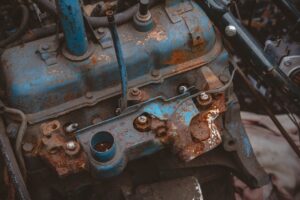
Car Smells Like Burning Oil? 8 Causes, Exact Fixes + Fire Risk Guide
Car smells like burning oil? Pinpoint the exact cause in 60 seconds using our location-based diagnostic. 8 real causes explained with repair costs, is-it-safe-to-drive guide, and step-by-step DIY fixes.
That sharp, acrid smell burning through your vents or hitting you the moment you step out of the car is your engine sending a distress signal. A car that smells like burning oil is telling you oil has escaped the sealed system and is making contact with something very hot — and in the worst case scenario, that combination can cause an engine fire. Most cases are far less dramatic than that, but every one of them requires diagnosis before the smell is dismissed as normal.
This guide gives you a location-based diagnostic to pinpoint the exact source in 60 seconds, all 8 real causes explained with what they look like and cost to fix, an honest answer to whether it is safe to drive, and step-by-step checks you can do right now without tools.
Diagnose the Source in 60 Seconds — The “Where” Method
Before checking anything under the hood, use the location and timing of the smell to identify the most likely cause. This is the diagnostic step every other guide skips:
| Where and When You Smell It | Most Likely Source | Urgency |
|---|---|---|
| Outside the car immediately after parking | Oil dripping onto hot exhaust manifold or catalytic converter | 🔴 Diagnose today |
| Inside the cabin through vents while driving | Oil near the firewall or cowl area — PCV system or valve cover leak | 🔴 Stop and inspect |
| Only after an oil change, first few drives | Oil spilled during service burning off engine surfaces — often harmless | 🟢 Wait 2–3 drives |
| Only at idle or traffic stops, not at highway speed | Valve cover gasket leak dripping onto exhaust manifold at low speed | 🟡 Inspect this week |
| Only at highway speed, not at idle | Oil seeping from front or rear main seal onto hot drivetrain components | 🟡 Inspect soon |
| Blue-gray smoke from exhaust tailpipe + smell | Oil burning internally — piston rings or valve seals | 🔴 Urgent — mechanic needed |
| Smell plus oil pressure warning light | Critically low oil from significant leak | 🚨 Stop driving immediately |
| Smell only when heater is turned on | Oil near the firewall heating up through the HVAC intake | 🔴 Inspect today |
8 Real Causes of Burning Oil Smell in Cars
1. Valve Cover Gasket Leak — Most Common Cause
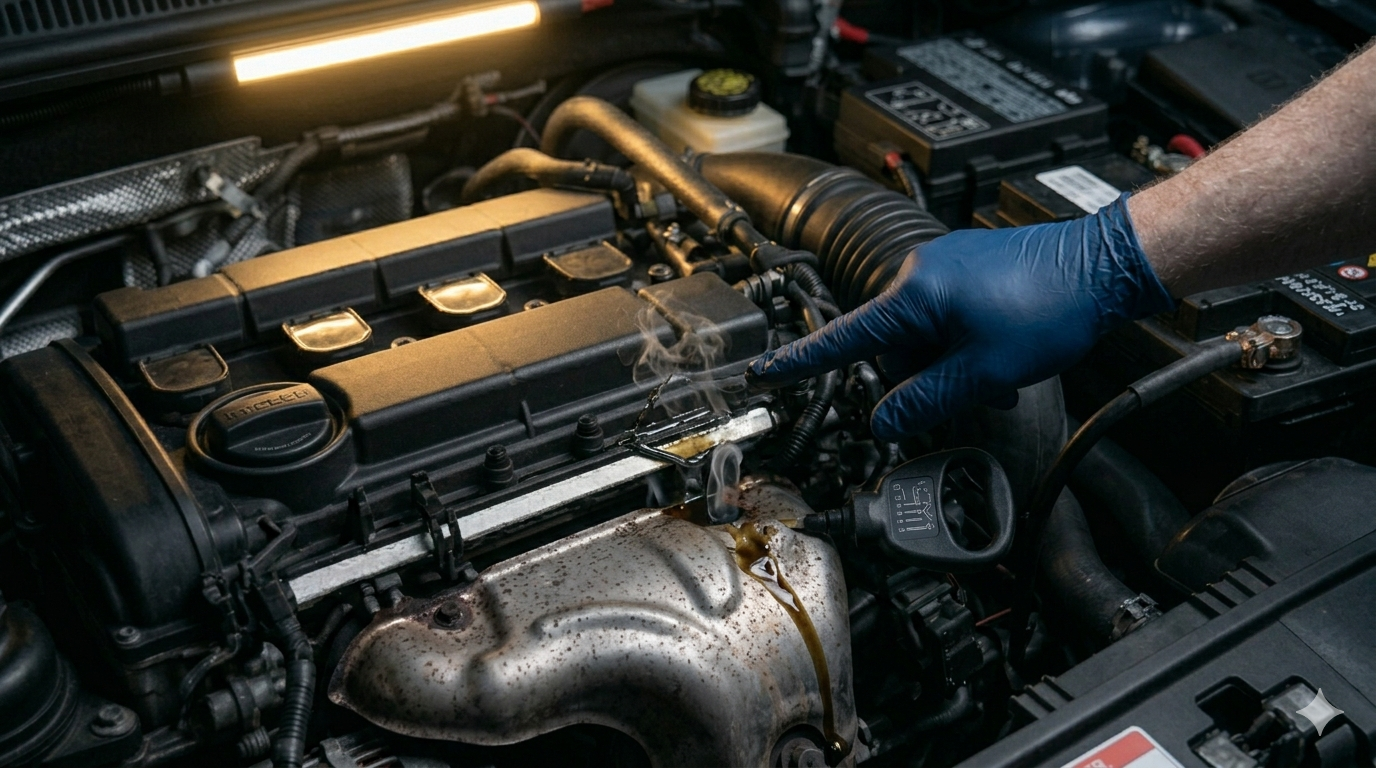
The valve cover sits on top of the engine and is sealed to it by a rubber gasket. Over time — typically after 60,000–100,000 miles — this gasket hardens, shrinks, and cracks. Oil seeps past the failed gasket and drips onto the exhaust manifold directly below, which runs at temperatures between 800°F and 1,200°F. The oil vaporizes instantly, creating the sharp burning smell that gets stronger when you stop and the airflow that was carrying the smell away disappears.
How to identify it: Open the hood and look at the top of the engine. A valve cover gasket leak leaves a greasy, brownish residue along the seam where the valve cover meets the engine block. You may also see discoloration or a baked-on crust on the exhaust manifold below the seam — that is vaporized oil that has cooked onto the hot metal over time.
Fix and cost: Valve cover gasket replacement is $150–$350 at a shop including labor, or $20–$40 in parts for a capable DIY job. On most 4-cylinder engines it takes 1–2 hours and requires only basic tools. V6 and V8 engines with two valve covers are more complex.
2. Oil Spilled During a Recent Oil Change
If the burning oil smell appeared within the first few drives after an oil change, spilled oil is the most likely explanation and the least serious one. During an oil change, small amounts of oil inevitably contact hot engine surfaces — the exhaust manifold, the engine block, or the exhaust pipes. This oil burns off over the next few heat cycles, producing a smell that typically disappears within 2–3 drives.
An overfilled oil level after a service is a related issue. If the technician added too much oil, the excess can be pushed out through the PCV system into the intake manifold or past gaskets under the higher crankcase pressure. This produces a persistent smell that does not clear up on its own. Check your dipstick — if the oil is noticeably above the MAX line, you have an overfill that needs to be corrected.
Fix: If smell appeared after oil change — wait 2–3 drives. If it persists beyond that, inspect for overfill or an improperly installed drain plug and filter. A loose oil filter is one of the most common post-service leak sources.
3. Oil Pan Gasket or Drain Plug Leak
The oil pan sits at the very bottom of the engine and holds your engine’s oil supply when the engine is off. A gasket seals the pan to the engine block, and a drain plug with a washer seals the drain hole. Either can fail — the gasket through age and vibration damage, the drain plug washer through stripped threads or a missing/damaged washer from a careless oil change.
An oil pan leak typically leaves visible drops or puddles under the car when parked. The smell occurs when leaking oil hits the hot exhaust system components that run close to the oil pan. This is especially noticeable after highway driving when the exhaust is at maximum temperature.
Fix and cost: Drain plug washer replacement — $5–$15 DIY. Oil pan gasket replacement — $200–$600 at a shop (labor-intensive on some vehicles where the pan is difficult to access).
4. Clogged or Failed PCV Valve
The Positive Crankcase Ventilation (PCV) valve is a small, inexpensive component that serves a critical function: it routes blow-by gases (combustion gases that leak past piston rings) out of the crankcase and back into the intake manifold to be burned. This prevents pressure buildup inside the engine.
When the PCV valve clogs or fails, crankcase pressure builds up with no outlet. This pressure forces oil past seals and gaskets that are designed to contain oil under normal pressure — creating leaks at multiple points simultaneously. The oil from these pressure-driven leaks contacts hot exhaust components and burns. PCV failure is especially common as an explanation when a car develops multiple simultaneous oil leaks that seem to appear from everywhere at once.
How to test it: With the engine warm and running, remove the PCV valve from its hose. You should feel strong suction — the valve should create a clicking sound when shaken and the engine should idle slightly rougher with it disconnected. If there is no suction or the valve rattles loosely, it has failed.
Fix and cost: PCV valve replacement is one of the cheapest fixes in automotive maintenance — typically $5–$30 for the part and 10–20 minutes of work. Always replace the PCV hose at the same time if it shows any cracking or hardening.
5. Camshaft or Crankshaft Seal Leak
The camshaft and crankshaft protrude through the engine block and are sealed at their exit points by rubber lip seals. These seals prevent oil from leaking out around the rotating shafts. Over time — particularly on high mileage engines — these seals harden and lose their ability to maintain a tight seal against the rotating shaft surface.
A failing front crankshaft seal leak is especially dangerous because the leaking oil can contaminate the serpentine belt, causing it to slip or fail. A failing rear main seal is one of the more expensive repairs — the transmission must often be removed to access it. Both produce burning oil smells when the leaked oil contacts the nearby exhaust and catalytic converter.
Fix and cost: Front crankshaft seal — $200–$500. Rear main seal — $600–$1,200 (labor-intensive). High-mileage oil with seal conditioners can slow or reduce early-stage seal seepage significantly.
6. Oil Burning Internally — Piston Rings or Valve Seals
When the burning oil smell comes from the exhaust tailpipe rather than the engine bay, the problem is internal — oil is entering the combustion chamber and burning with the air-fuel mixture. Two components most commonly cause this: worn piston rings that allow oil to pass from the crankcase into the cylinder, and hardened valve stem seals that allow oil to drip down the valve stem into the combustion chamber.
The definitive visual indicator is blue or blue-gray exhaust smoke — particularly visible on cold starts when oil that pooled on valve seats overnight drips into the cylinder. Blue smoke on startup that clears after a minute typically indicates valve stem seal wear. Blue smoke that appears consistently during driving and acceleration typically indicates piston ring wear.
Internal oil burning also causes steadily dropping oil levels between changes without any visible external leak. If your dipstick shows oil loss but there is no puddle under the car and no obvious external seepage, the engine is burning the oil internally.
Fix and cost: Valve stem seal replacement — $300–$900. Piston ring replacement — $1,500–$4,000 (major engine work). Switching to high-mileage oil reduces consumption in mild cases and buys time.
7. Oil on the Catalytic Converter
The catalytic converter operates at temperatures between 800°F and 1,600°F — hot enough to ignite oil that contacts it. When any oil leak drips or sprays onto the catalytic converter, it burns instantly and produces an intense, acrid smell that can fill the cabin rapidly. This situation carries the highest fire risk of any burning oil scenario.
Oil reaches the catalytic converter through several paths: a front seal or gasket leak that drips oil onto the hot underbody, a turbocharger oil seal failure that allows oil to enter the exhaust stream directly, or oil blown from the PCV system into the intake that passes through the engine and enters the exhaust as unburned hydrocarbons.
The fire risk is real: The NFPA reports that vehicle fires caused by fuel and lubricant leaks onto hot surfaces represent a significant percentage of non-collision vehicle fires. If you see oil actively smoking from under the car near the exhaust, get everyone out of the vehicle immediately and call emergency services.
8. Overfilled Engine Oil
Overfilling the engine by even half a quart above the MAX line creates crankcase pressure problems. The crankshaft’s rotating counterweights contact and aerate the excess oil, creating oil foam that is pushed out through the PCV system in mist form. This oil mist coats intake components and eventually reaches the combustion chamber. Simultaneously, the increased crankcase pressure forces oil past seals and gaskets at a higher rate than normal.
The burning smell from overfill typically appears within the first drive after a service, differs from other burning oil smells by being present at both idle and highway speed, and is accompanied by white or blue-white smoke from the exhaust. Check the dipstick — if the oil is above the MAX mark, drain the excess before driving further.
Is It Safe to Drive When Your Car Smells Like Burning Oil?
| Situation | Safe to Drive? | Distance Limit | Action |
|---|---|---|---|
| Smell only after oil change, first 1–2 drives | ✅ Yes | Normal driving | Wait 2–3 drives to clear |
| Faint smell, no smoke, oil level normal | ✅ Short term | Drive to shop | Diagnose within a week |
| Consistent smell, oil level dropping slowly | ⚠️ Caution | Keep topping up | Diagnose and fix within days |
| Strong smell inside cabin through vents | ⚠️ Limited | Drive to shop only | Inspect today |
| Blue smoke from exhaust + smell | ⚠️ Monitor closely | Drive to shop | Professional diagnosis needed |
| Oil level at or below minimum | ❌ No — top up first | Do not drive until topped up | Add oil immediately |
| Oil pressure warning light on | 🚨 Stop now | Zero — pull over | Turn off engine immediately |
| Visible smoke from under hood or undercar | 🚨 Stop now | Zero | Get everyone out — fire risk |
Step-by-Step DIY Inspection — Do This Now
- Check the oil level first. Pull the dipstick with the engine off and cooled. Level should be between MIN and MAX. If at or below MIN, add oil immediately before any further diagnosis or driving.
- Look for obvious wet spots. With the engine cold, open the hood and look for shiny, greasy areas around the valve cover seam, around the oil filter, around the drain plug area (visible from under the car), and around any visible gasket seams. Fresh oil leaks are easy to spot — they appear as wet, dark patches.
- Check the oil cap area. A leaking or improperly seated oil cap allows oil to spray around the engine bay during operation. Ensure the cap is fully seated and check for oil residue around it.
- Run the engine and watch. Start the engine and watch the area around the exhaust manifold (the cast iron or stainless header on the side of the engine) for any wisps of smoke or vaporization. This visible smoke will be coming from oil contacting the hot manifold.
- The cardboard test. Park on a clean surface and place cardboard under the car overnight. Check in the morning — oil drips will show the approximate location of the leak. Front of the car under the engine suggests a front seal, valve cover, or oil pan leak. Center suggests oil pan. Rear suggests rear main seal.
- Check the exhaust. Look at the tailpipe during a cold start. A puff of blue-gray smoke that clears within a minute suggests valve stem seal wear. Persistent blue smoke during driving suggests piston ring wear.
Complete Repair Cost Guide
| Repair | DIY Cost | Shop Cost | Difficulty |
|---|---|---|---|
| Valve cover gasket replacement | $20–$40 parts | $150–$350 | Easy–Moderate |
| Drain plug washer replacement | $5–$15 | Included in oil change | Easy |
| Oil pan gasket replacement | $30–$80 parts | $200–$600 | Moderate |
| PCV valve replacement | $5–$30 | $50–$120 | Easy |
| Front crankshaft seal | $20–$60 parts | $200–$500 | Moderate–Hard |
| Rear main seal replacement | Not DIY-friendly | $600–$1,200 | Very hard |
| Valve stem seal replacement | Not DIY-friendly | $300–$900 | Hard |
| Piston ring replacement | Not DIY-friendly | $1,500–$4,000 | Major engine work |
| Camshaft seal replacement | $30–$80 parts | $150–$400 | Moderate |
| Oil filter or drain plug re-torque | Free | Free at most shops | Easy |
Frequently Asked Questions
Why does my car smell like burning oil?
A burning oil smell means oil has leaked out of the sealed engine system and is contacting a hot surface — most commonly the exhaust manifold, catalytic converter, or exhaust pipes. The most common causes are a leaking valve cover gasket, a clogged PCV valve, or an oil spill from a recent oil change that is burning off. Less commonly, oil is burning inside the engine due to worn piston rings or valve seals, in which case the smell comes from the exhaust tailpipe rather than the engine bay.
Is it safe to drive when my car smells like burning oil?
For short distances with a faint smell and a normal oil level, you can drive carefully to a shop. However, if the oil pressure warning light is on, if you see visible smoke from under the hood or the undercar, or if the smell is strong and entering the cabin through the vents — stop immediately. Running an engine with low oil pressure or an active leak onto hot exhaust components risks both engine damage and fire.
Why does my car smell like burning oil after an oil change?
This is almost always oil spilled during the service burning off hot engine surfaces. It is normal and typically clears within 2–3 drives. If the smell persists beyond that, check for an overfill (dipstick above MAX line), a loose oil filter, or a missing drain plug washer — all common mistakes that produce persistent burning oil smells after service.
Why does my car smell like burning oil but there is no leak?
When there is no visible puddle under the car, the oil is either leaking in small amounts that evaporate before reaching the ground, or burning internally. A PCV valve failure causes oil mist to enter the intake without creating a puddle. Worn piston rings or valve seals cause internal burning with no external leak. The key diagnostic clue: check for blue or blue-gray exhaust smoke and monitor how quickly your oil level drops between changes.
Can a burning oil smell cause a car fire?
Yes — oil leaking onto a catalytic converter operating at 800°F–1,600°F can ignite. This is one of the most common causes of non-collision vehicle fires. The risk is highest when there is an active, dripping leak rather than occasional seepage. If you see visible smoke from under the car near the exhaust, especially after driving, stop immediately, turn off the engine, get everyone away from the vehicle, and call emergency services.
Related Guides
A burning oil smell often accompanies other engine problems. If your oil level is consistently dropping, read our guide on 10 signs your car needs an oil change to identify all the warning signs. For high-mileage vehicles where burning oil is more common, our guide on best oil for high mileage cars covers formulas specifically designed to reduce oil consumption and seal leaks. And if your car is also making grinding noises, check our guide on grinding noise when braking — multiple systems can fail simultaneously.