The Most Important Fluids to Check in Your Car
Regular car maintenance is essential for keeping your vehicle running smoothly, improving fuel efficiency, and preventing expensive repairs. One of the simplest ways to maintain your car is by checking its fluids regularly. These fluids perform important functions, such as lubricating engine parts, controlling temperature, helping the brakes work properly, and making steering easier.
When fluid levels become too low or the fluids become contaminated, your vehicle may develop serious mechanical problems. Fortunately, checking most car fluids is straightforward and does not require advanced mechanical knowledge.
In this guide, we will discuss the most important fluids to check in your car, explain their functions, and show you when they may need to be topped up or replaced.
1. Engine Oil
Engine oil is one of the most important fluids in your vehicle. It lubricates the moving parts inside the engine, reduces friction, helps control heat, and carries dirt and other contaminants toward the oil filter.
Without enough engine oil, the engine’s internal components can wear out quickly. In severe cases, low oil levels can cause serious engine damage.
How to check engine oil:
- Park your car on level ground and switch off the engine.
- Allow the engine to cool or follow the manufacturer’s recommended procedure for checking the oil.
- Locate the engine oil dipstick, remove it, and wipe it clean.
- Insert the dipstick fully, then remove it again.
- Check whether the oil level is between the minimum and maximum marks.
If the level is low, add the correct oil specified in your owner’s manual. Avoid overfilling the engine.
You should also pay attention to the oil’s condition. Oil that looks unusually contaminated, smells strongly of fuel, or appears milky may indicate a problem that needs professional inspection. Follow your vehicle manufacturer’s recommended oil-change intervals.
2. Engine Coolant
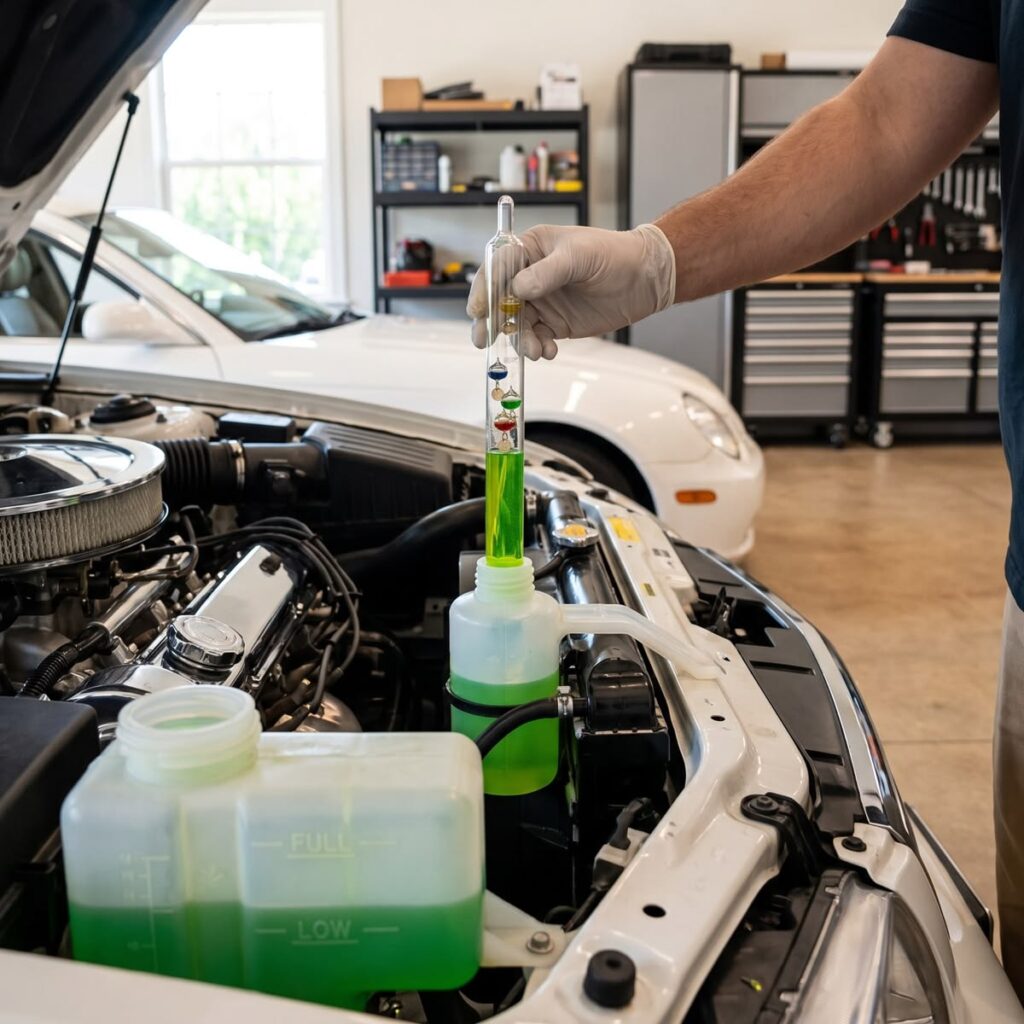
Engine coolant, sometimes called antifreeze, helps regulate engine temperature and protects the cooling system from corrosion. It circulates through the engine and radiator to prevent overheating.
Low coolant levels can cause the engine to overheat, potentially damaging important components such as the cylinder head gasket.
How to check engine coolant:
- Make sure the engine is completely cool.
- Locate the coolant reservoir under the bonnet.
- Check whether the coolant level falls between the minimum and maximum marks.
- If the level is low, add the correct type of coolant recommended for your vehicle.
Never remove a radiator cap or pressurised coolant-system cap while the engine is hot. Hot coolant can escape under pressure and cause serious burns.
If you frequently need to add coolant, do not simply keep topping it up. There may be a leak in a hose, radiator, water pump, or another part of the cooling system.
3. Brake Fluid
Brake fluid transfers the force from your brake pedal to the braking components at the wheels. It is essential for safe and reliable braking.
When brake fluid is too low or contaminated, braking performance may be affected. A low level can sometimes indicate worn brake pads, but it may also point to a leak that requires immediate attention.
How to check brake fluid:
- Park the vehicle safely on level ground.
- Locate the brake fluid reservoir, usually near the back of the engine compartment.
- Check the level against the minimum and maximum markings.
- Inspect the reservoir and surrounding area for visible signs of leakage.
Use only the brake fluid specification stated in your owner’s manual or on the reservoir cap.
If the brake fluid level is below the minimum mark, or your brake pedal feels unusually soft, the brakes feel weak, or a brake warning light appears, have the braking system inspected promptly. Do not continue driving if braking performance is compromised.
Brake fluid should also be replaced according to the manufacturer’s recommended service interval because it can absorb moisture over time.
4. Transmission Fluid
Transmission fluid lubricates and cools transmission components. In automatic vehicles, it also helps transmit power and supports gear changes. Some manual transmissions also use specialised transmission fluid or gear oil.
Insufficient or degraded transmission fluid may cause rough shifting, delayed engagement, unusual noises, or overheating.
How to check transmission fluid:
The procedure depends on the type of transmission. Some vehicles have a transmission dipstick, while others require a specific temperature, vehicle position, or workshop procedure to check the fluid level.
Consult your owner’s manual before attempting to check it. Never add ordinary engine oil or an unspecified fluid to the transmission.
If you notice slipping gears, unusual shifting, or fluid leaking beneath the vehicle, arrange an inspection. Not all transmission fluids are designed to be checked or topped up by the owner.
5. Power Steering Fluid
Power steering fluid is used in many vehicles equipped with hydraulic power steering. It helps the steering system operate smoothly and reduces the effort needed to turn the steering wheel.
Low power steering fluid can make steering difficult and may cause whining or groaning noises when turning.
How to check power steering fluid:
- Check your owner’s manual to determine whether your vehicle has hydraulic or electric power steering.
- If it has a hydraulic system, locate the power steering reservoir.
- Follow the specified procedure for checking the fluid level.
- Add only the fluid recommended by the manufacturer.
Many modern cars use electric power steering and do not have a power steering fluid reservoir.
If the fluid level repeatedly drops or the steering becomes unusually heavy, have the system checked for leaks or mechanical faults.
6. Windshield Washer Fluid
Windshield washer fluid helps remove dust, dirt, insects, and other debris from your windscreen. Clear visibility is especially important when driving in heavy rain, dusty conditions, or on busy roads.
Although washer fluid does not affect engine performance, running out of it can make driving less safe.
How to check washer fluid:
- Locate the windshield washer reservoir, usually identified by a windscreen spray symbol.
- Open the cap and check the level if the reservoir allows visual inspection.
- Refill it with suitable windshield washer fluid.
- Test the washer system to ensure the fluid sprays correctly.
Avoid using products that may damage the washer system or leave residue on the glass. In warmer climates, a suitable washer fluid helps remove dust and grime effectively.
7. Differential Fluid
Differential fluid lubricates the gears inside the differential, which allows the wheels to rotate at different speeds when turning. This fluid is particularly important in rear-wheel-drive, four-wheel-drive, and some all-wheel-drive vehicles.
Low or degraded differential fluid can lead to excessive friction, overheating, whining noises, and costly gear damage.
Unlike engine oil or washer fluid, differential fluid is not always easy to check at home. Many differentials use a fill plug rather than a dipstick, and the vehicle may need to be positioned correctly for an accurate check.
Follow the manufacturer’s service schedule and have the differential inspected if you notice leaks or unusual noises from the drivetrain.
Some four-wheel-drive vehicles also have a separate transfer case that requires its own specified fluid.
8. Clutch Fluid
In many vehicles with hydraulic clutches, clutch fluid transfers pressure from the clutch pedal to the clutch mechanism. Some vehicles share a reservoir with the brake system, while others have a separate reservoir.
Low clutch fluid may cause difficulty changing gears, a soft clutch pedal, or problems engaging the clutch.
Check your owner’s manual to identify the correct reservoir and fluid specification. If the level is low, have the system checked for leaks rather than repeatedly topping it up.
Vehicles with cable-operated clutches do not use clutch hydraulic fluid.
How Often Should You Check Your Car’s Fluids?
The recommended inspection schedule depends on your vehicle, age, mileage, and driving conditions. A practical routine is to inspect accessible fluid levels about once a month and before long journeys.
Check them more frequently if you drive in very hot weather, encounter heavy traffic regularly, travel on rough roads, or notice warning lights or unusual vehicle behaviour.
Always consult your owner’s manual for the correct fluid specifications and service intervals. Never mix different fluid types unless the manufacturer explicitly permits it.
Conclusion
Checking your car’s fluids is a simple but important part of vehicle maintenance. Engine oil, coolant, brake fluid, transmission fluid, power steering fluid, and windshield washer fluid all play important roles in keeping your vehicle safe and reliable. Differential and clutch fluids also deserve attention where applicable.
Make fluid inspections part of your regular maintenance routine, watch for leaks, and address unusual changes promptly. Remember that topping up a fluid is not always enough to solve the underlying problem.
With proper checks and timely servicing, you can help extend your car’s lifespan, reduce the risk of unexpected breakdowns, and avoid unnecessary repair costs.