How Long Do Brake Pads Last? (By Type, Driver & Climate)
How long do brake pads last? The honest range is 25,000 to 70,000 miles — but the right answer for your car depends on pad compound, driving style, vehicle weight, and climate. This guide gives you the exact lifespan formula, the 6 warning signs they’re worn, and how to make them last significantly longer.
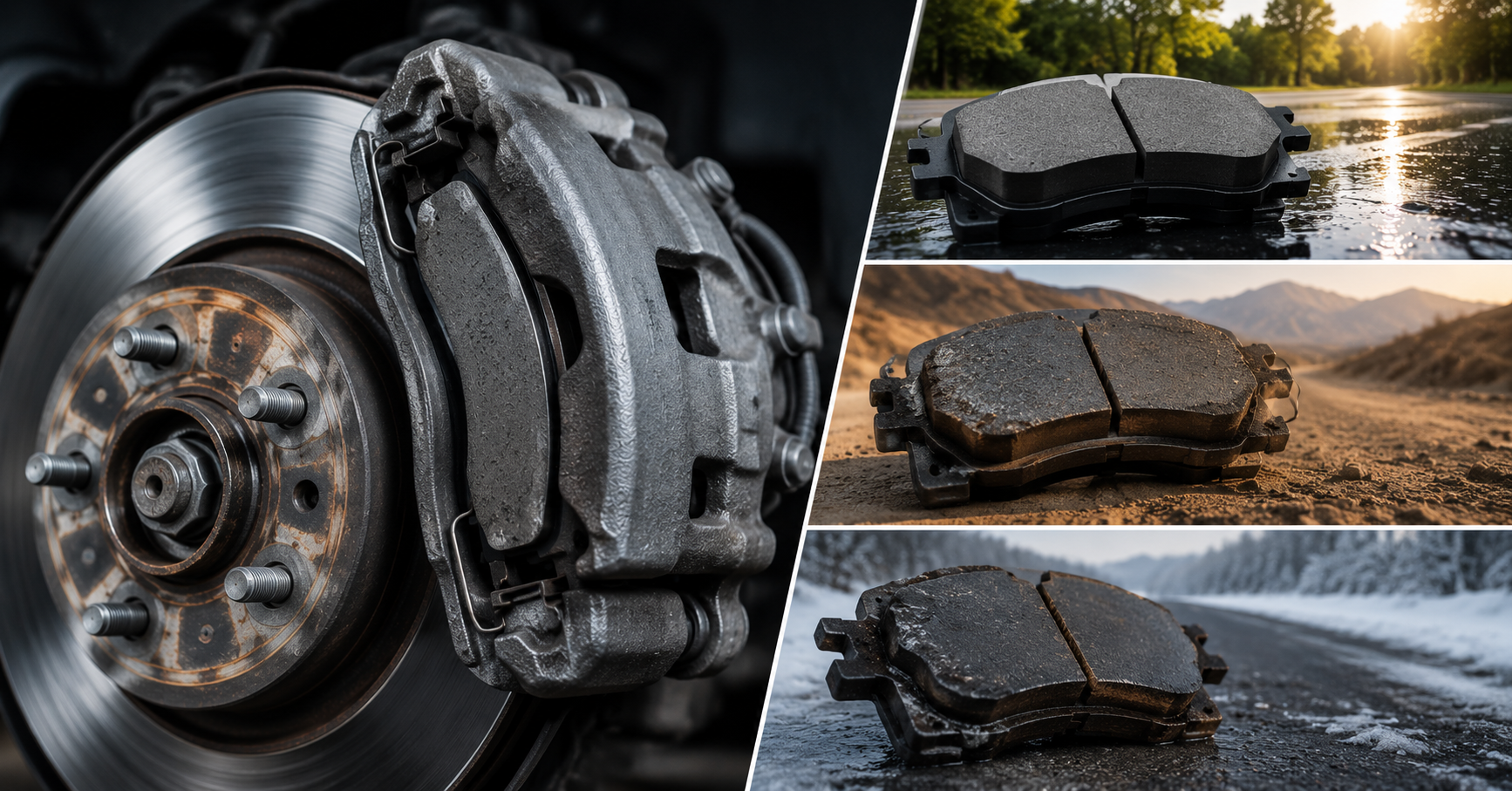
Brake pads last 25,000 to 70,000 miles on average — but that range is nearly useless without context. An organic brake compound on a heavy SUV driven aggressively in a hilly city wears out in under 25,000 miles. A ceramic compound on a lightweight sedan driven mostly on highways in flat terrain lasts over 60,000 miles. The three variables that matter most: pad compound (organic wears fastest, ceramic lasts longest), vehicle weight (heavier vehicles need more braking force per stop), and driving style (aggressive city driving can reduce pad life by 40-60% compared to highway driving). Know these three and you can predict your brake pad life within 10,000 miles.
The question sounds simple. The answer has more variables than most drivers expect. Brake pads are a wear item — they literally sacrifice themselves to stop your vehicle — and how fast they sacrifice depends on physics that differ for every driver, every car, and every commute. This guide gives you the complete formula, not just a range.
Brake Pad Life by Compound Type — The Foundation
| Pad Compound | Typical Lifespan | Best For | Weakness | Approximate Cost per Axle |
|---|---|---|---|---|
| Organic (Non-Asbestos) | 25,000–45,000 miles | Light vehicles, normal street driving, quiet operation | Wears fastest, produces more dust, poor performance when hot | $30–$80 |
| Semi-Metallic | 35,000–60,000 miles | Performance vehicles, trucks, towing, varied conditions | Noisier, harder on rotors, less comfortable in cold | $50–$120 |
| Ceramic | 50,000–70,000 miles | Everyday commuting, highway driving, clean wheels preferred | Higher cost, not ideal for extreme heat or track use | $80–$200 |
| Low-Metallic NAO | 30,000–55,000 miles | European and performance vehicles as OEM spec | More rotor wear than ceramic, some noise | $60–$150 |
Most passenger cars come from the factory with organic or low-metallic pads because they are quiet and smooth — not because they last longest. Upgrading to ceramic pads at your next brake service costs more upfront but extends pad life significantly and reduces brake dust on your wheels. For most daily drivers, ceramic is the best value over time.
The 5 Factors That Determine Your Specific Pad Life
Factor 1 — Driving Style (The Biggest Variable)
This single factor has more impact on brake pad life than anything else, including pad compound. An aggressive driver who brakes late and hard from high speeds removes 3 to 5 times more material per stop than a smooth driver who begins braking early at highway speed.
| Driving Style | Multiplier on Pad Life | Example |
|---|---|---|
| Highway driver — light, early braking | 1.5–2x longer than average | 50,000-mile organic pad lives 70,000+ miles |
| Normal mixed driving | Baseline (1x) | Standard manufacturer estimates apply |
| City driver — frequent stops from 30–45 mph | 0.7x shorter than average | 50,000-mile pad lives 35,000 miles |
| Aggressive/late braking from high speeds | 0.4–0.5x shorter than average | 50,000-mile pad lives 20,000–25,000 miles |
| Left-foot braking (riding the brake) | 0.3–0.4x shorter than average | Fastest possible wear — pads may last under 20,000 miles |
The physics: brake pads convert kinetic energy to heat through friction. The faster you are going when you begin braking, the more kinetic energy must be converted per stop — and kinetic energy scales with the square of velocity. Braking from 60 mph removes four times more pad material than braking from 30 mph. This is why highway commuters who brake rarely from moderate speeds can genuinely get 70,000 miles from a set of ceramic pads, while stop-and-go city commuters replace them every 25,000.
Factor 2 — Vehicle Weight
Heavier vehicles require proportionally more braking force to stop from any given speed. A compact car weighing 2,800 pounds produces significantly less stress on brake pads per stop than a full-size pickup truck or large SUV weighing 5,500 to 6,500 pounds. This is why trucks and large SUVs consistently see shorter brake pad life than the same compound on a smaller vehicle — despite identical driving styles.
| Vehicle Category | Typical Weight | Expected Pad Life Adjustment |
|---|---|---|
| Compact/subcompact car (Civic, Corolla) | 2,600–3,000 lbs | +10–20% longer than average |
| Mid-size sedan/crossover (Camry, RAV4) | 3,200–4,000 lbs | Baseline average life |
| Full-size SUV (Tahoe, Expedition) | 5,000–5,800 lbs | 15–25% shorter than average |
| Half-ton pickup truck (F-150, Silverado) | 4,500–5,500 lbs empty | 20–30% shorter than average |
| Truck with payload or towing | Adds 1,000–10,000+ lbs effective | 30–50% shorter — inspect more frequently |
Factor 3 — Terrain and Climate
Hilly terrain forces braking that flat terrain does not. A commuter in San Francisco or Denver brakes significantly more frequently — and often from higher speeds — than someone driving the same distance in Dallas or Phoenix on flat roads. Studies of fleet vehicles show brake pad consumption 30 to 40 percent higher in hilly urban areas versus flat suburban routes of equal mileage.
Climate affects pad life through two mechanisms. First, frequent rain and humidity accelerate surface rust formation on rotors overnight — the scraping sound many drivers hear on the first few stops in the morning. This rust is normal and does not significantly affect pad life. However, prolonged wet conditions and road salt in northern climates accelerate wear on pad hardware — shims, clips, and pins — which causes uneven pad contact and accelerated one-sided wear. Second, extreme cold makes organic pad compounds harder and less compliant, reducing effectiveness and increasing wear during warm-up stops.
Factor 4 — Front vs Rear Brake Pad Life
Front and rear brake pads wear at dramatically different rates on most vehicles, and most drivers do not realize this until one axle needs replacement significantly earlier than the other.
| Axle | Typical Braking Load | Relative Wear Rate | Replacement Frequency |
|---|---|---|---|
| Front pads | 60–70% of total braking force | 2–3x faster than rear | More frequent — often 2:1 ratio |
| Rear pads | 30–40% of total braking force | Slower | Often outlast 2 sets of front pads |
The reason: when braking, weight transfers forward. The front brakes must provide the majority of stopping force while the rear brakes serve primarily to stabilize the vehicle and prevent rear-wheel lock-up. On most front-wheel-drive vehicles, this front-heavy braking load means front pads wear out roughly twice as fast as rear pads. Do not assume that because your rear pads are fine, your front pads are too — always inspect both axles at each service.
Factor 5 — Rotor Condition and Caliper Function
Warped, scored, or below-minimum-thickness rotors accelerate pad wear because the pad cannot maintain uniform contact across the rotor surface. High spots on a warped rotor create concentrated wear zones on the pad compound. Replacing pads on worn rotors without addressing the rotors wastes the new pads. See our guide on car shakes when braking for rotor condition diagnosis.
A seized or sticking brake caliper causes one pad to drag continuously against the rotor even when the brake pedal is released. This constant light friction generates heat and wears one pad dramatically faster than its partner on the same axle — the worn pad is often 3 to 4 times thinner than the adjacent pad when the car comes in for inspection. If you notice unusual heat from one wheel after driving, or the car pulling slightly to one side under braking, have the caliper inspected before replacing pads.
6 Warning Signs Your Brake Pads Are Worn
- Squealing or squeaking when braking — the most reliable early warning. Brake pads contain a small metal wear indicator tab that contacts the rotor when the pad reaches minimum thickness. The resulting high-pitched squeal is designed to be heard at normal driving speeds. Do not ignore this sound — it means replacement is needed within a few hundred miles, not thousands.
- Grinding or metal-on-metal sound when braking — you missed the squealing warning and the pad is now worn through to the metal backing plate. The plate is grinding directly on the rotor, destroying both components simultaneously. Every stop from this point adds rotor damage to an already necessary pad replacement. See our grinding noise when braking guide for the full damage assessment.
- Steering wheel vibration when braking — usually indicates warped rotors from prolonged heat stress, often caused by dragging pads or extended aggressive braking. The pads themselves may still have material remaining but the rotors need service. See our car shakes when braking guide.
- Brake pedal pulsation — a pulsing sensation through the pedal under moderate braking without a steering wheel shake often indicates rear rotor warping or uneven pad deposit on the rear rotors.
- Car pulls to one side when braking — uneven pad wear between left and right on the same axle, or a seized caliper on one side. The side with more friction pulls the car in that direction.
- Visible pad thickness under 3mm through wheel spokes — you can often see the brake pad sandwiched between the caliper and rotor by looking through the wheel spokes. At 3mm or less of pad material remaining, replacement is overdue.
Inspection Schedule — When to Check
| Situation | Check Brake Pads | What to Look For |
|---|---|---|
| Every tire rotation (5,000–7,500 miles) | ✅ Every time | Pad thickness visible through wheel spokes |
| Any brake noise appears | ✅ Immediately | Source of squeal or grind |
| Before any long road trip | ✅ Always | Adequate material for trip demands |
| After towing or hauling heavy loads | ✅ Inspect | Accelerated wear from extra weight |
| Annual maintenance check | ✅ Every year | Overall brake system condition |
| Car pulls under braking | ✅ Immediately | Caliper function and even pad wear |
How to Make Brake Pads Last Longer
- Increase following distance and begin braking earlier — the single most effective habit change. Beginning braking 100 feet earlier at highway speed removes dramatically less material per stop than late hard braking.
- Engine braking before brake application — lifting off the throttle early and allowing engine braking to reduce speed before applying the brakes reduces the work each brake application must perform.
- Avoid left-foot braking — many drivers unconsciously rest their left foot on the brake pedal in automatic transmission vehicles. Even light contact applies the brakes and causes continuous wear and heat generation. Keep the left foot on the footrest.
- Upgrade to ceramic pads at next replacement — the lifespan difference between organic and ceramic on a typical vehicle over 100,000 miles is one or two additional sets of pads. Ceramic costs more per set but the total lifecycle cost is lower.
- Maintain correct tire pressure — underinflated tires increase rolling resistance and change the vehicle’s braking dynamics. Properly inflated tires provide consistent, predictable braking that reduces pad stress. Check monthly per our tire pressure guide.
- Do not drag brakes on long descents — sustained light brake application on mountain descents builds tremendous heat in the pads and rotors. Use engine braking and gear reduction on long downhill grades, applying brakes in firm intervals rather than continuous light pressure.
Replacement Cost Guide
| Service | DIY Cost | Shop Cost | Notes |
|---|---|---|---|
| Front brake pads only (organic) | $30–$80 parts | $150–$300 | Most common service |
| Front brake pads only (ceramic) | $80–$200 parts | $200–$400 | Recommended upgrade |
| Front pads + rotors | $100–$300 parts | $300–$600 | Always resurface or replace rotors with new pads |
| Rear brake pads only | $30–$80 parts | $150–$300 | Rear drum brakes cheaper than disc |
| Rear pads + rotors | $80–$250 parts | $250–$500 | Electronic parking brake adds complexity |
| Full 4-wheel brake service | $200–$500 parts | $500–$1,000 | Best value when all four corners need work |
| Caliper replacement (seized) | $60–$150 parts | $200–$400 | Required if caliper is sticking |
Frequently Asked Questions
How long do brake pads last?
Brake pads last 25,000 to 70,000 miles depending on three main factors: pad compound (organic pads wear fastest at 25,000–45,000 miles, ceramic pads last 50,000–70,000 miles), vehicle weight (heavier vehicles wear pads faster), and driving style (aggressive city driving can reduce life by 40–60% compared to smooth highway driving). Front pads wear 2 to 3 times faster than rear pads because they absorb 60 to 70 percent of total braking force.
How do I know when brake pads need replacing?
The clearest sign is a high-pitched squealing or squeaking sound when braking — this is the wear indicator tab contacting the rotor by design. Other signs include a grinding or metal-on-metal sound (pads worn through to the backing plate), steering wheel vibration when braking, the car pulling to one side under braking, or visible pad material under 3mm thick when looking through the wheel spokes. Inspect pad thickness at every tire rotation and replace at 3mm remaining or less.
How long do front brake pads last compared to rear?
Front brake pads typically last about half as long as rear brake pads because they handle 60 to 70 percent of total braking force. On a vehicle where rear pads last 60,000 miles, front pads often need replacement at 25,000 to 35,000 miles. It is common for drivers to replace front pads twice before the rear pads need their first replacement. Always inspect both axles separately — rear pad condition does not predict front pad condition.
Can I just replace brake pads without replacing rotors?
Only if the rotors are within manufacturer thickness specifications and show no warping, scoring, or heat cracks. If rotors are at or below minimum thickness — stamped on the rotor hat or found in the service manual — they must be replaced with the pads. Fitting new pads to worn rotors wastes the new pads because the rotor surface condition directly affects how the new pad material beds in and wears. Most shops measure rotor thickness as part of any brake service and advise accordingly.
Related Guides
Brake pad wear connects to other brake system symptoms. If your car is already making a grinding noise when braking, our grinding noise when braking guide tells you exactly how much rotor damage has occurred and whether resurfacing or replacement is needed. For steering wheel vibration under braking, see our car shakes when braking guide. And for timing your brake replacement within the broader vehicle maintenance picture, our complete car maintenance schedule includes brake inspection intervals alongside every other service.