Car Making Noise When Turning: 9 Causes Diagnosed by Sound Type + Turn Direction
Car making noise when turning? Clicking means CV joint. Clunking means ball joint or tie rod. Whining means power steering. Grinding means wheel bearing. Our sound-type + turn-direction diagnostic matrix identifies your exact cause before any money is spent — with repair costs and safety urgency for all 9 causes.
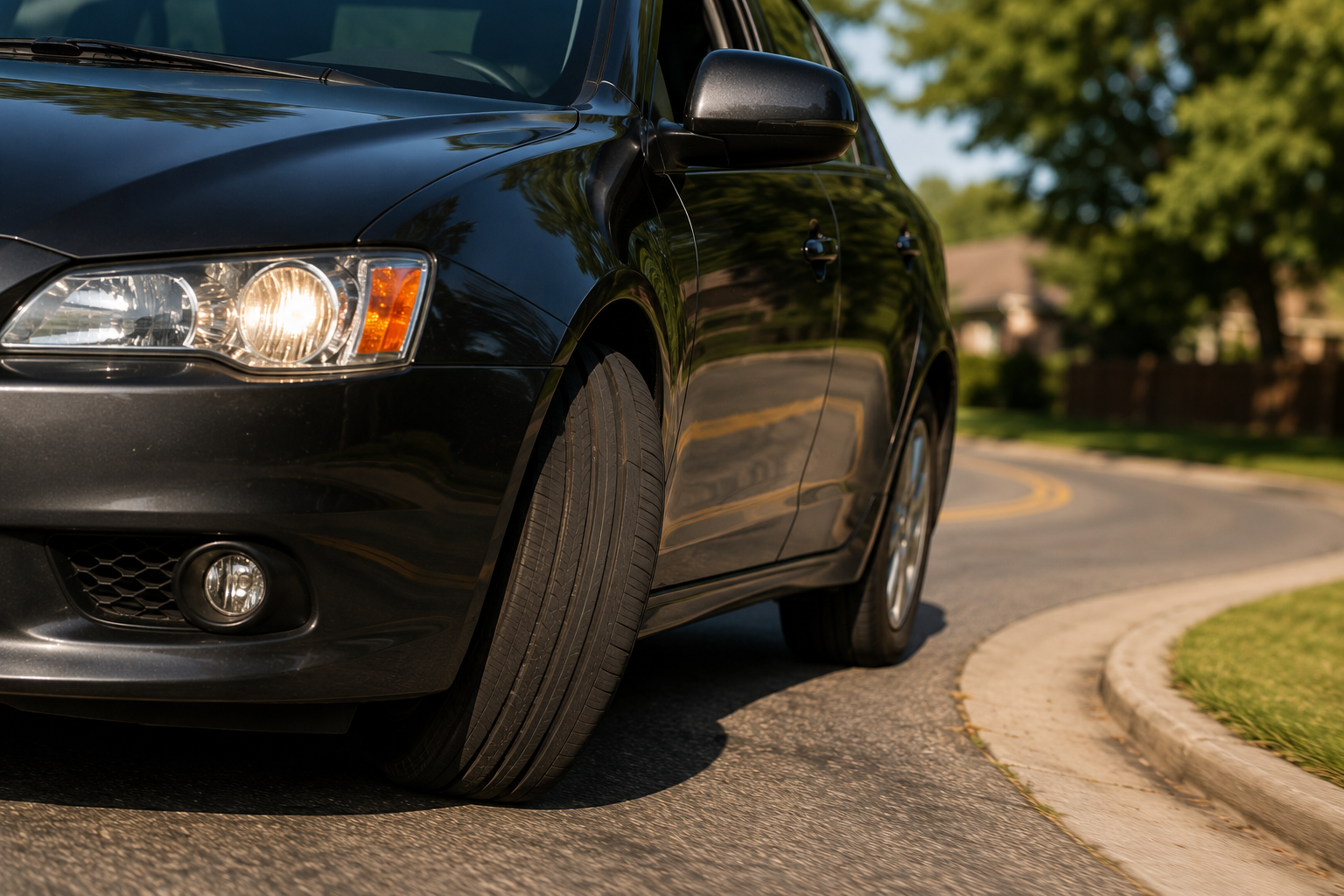
Car making noise when turning: clicking during sharp turns at low speed means CV joint — the boot has likely torn and the joint is running without grease. Clunking over bumps while turning means ball joint or tie rod end — a safety-critical component that needs inspection within days, not weeks. Whining that increases when you turn the wheel means low power steering fluid on hydraulic systems, or a failing pump. Grinding during turns means wheel bearing — do not delay this one. Each sound is a different mechanical event, and treating them interchangeably is how drivers spend $800 replacing CV axles when the actual problem was a $15 power steering fluid top-off.
In fifteen years of working on cars, I have noticed that steering noise diagnosis trips more drivers up than almost anything else. Not because it is complicated — but because the same general symptom description (“it makes a noise when I turn”) covers nine completely different mechanical problems with repair costs ranging from free to $2,400. The sound itself is the diagnostic. A clicking noise and a clunking noise when turning are not variations of the same problem. They are different components telling you different things. Get the sound right, and the diagnosis practically does itself.
Step 1 — Identify Your Sound Type
Before anything else — what does the noise actually sound like? This single answer eliminates most possibilities immediately.
| Sound Description | Most Likely Component | Urgency | Electric PS Possible? |
|---|---|---|---|
| Clicking — rapid, rhythmic, like a playing card in spokes | CV joint / CV axle | 🟠 This week | ✅ Yes — not PS related |
| Clunking — hollow thud, single or intermittent | Ball joint, tie rod end, sway bar link | 🔴 Safety concern — inspect soon | ✅ Yes — not PS related |
| Whining — high pitch, increases with steering effort | Power steering pump, low PS fluid | 🟡 Monitor — top fluid first | ❌ Only on hydraulic PS |
| Grinding — harsh metallic, feels through steering wheel | Wheel bearing, worn strut bearing | 🔴 Safety risk — do not delay | ✅ Yes — not PS related |
| Creaking — like a rusty door hinge | Control arm bushings, strut mounts | 🟡 Soon — not immediately dangerous | ✅ Yes — not PS related |
| Popping — single sharp pop per turn | CV joint (worn), strut bearing | 🟠 This week | ✅ Yes |
| Groaning — low frequency, continuous during turn | Power steering rack, dry ball joints | 🟠 Soon | ❌ Mainly hydraulic PS |
| Rubbing — friction sound, worse at full lock | Tire rubbing wheel well, steering stop contact | 🟢 Minor — check tire fitment | ✅ Yes |
| Squealing — high pitch, brief, on turn initiation | Power steering belt slipping | 🟠 Check belt tension | ❌ Hydraulic PS only |
Step 2 — Turn Direction and Speed Matrix
The same sound in different conditions points to different causes. Narrow it further with these combinations.
| When and Direction | Primary Suspect | Secondary Suspect |
|---|---|---|
| Clicking — only turning left | Right CV axle outer joint | Weight transfers right during left turn, loading right CV |
| Clicking — only turning right | Left CV axle outer joint | Weight transfers left during right turn, loading left CV |
| Clicking — both directions equally | Both CV joints deteriorating or inner CV fault | Less common — inner joint clicks under power not just turning |
| Clunking — only over bumps while turning | Ball joint or control arm bushing | Sway bar end link — check for wear |
| Clunking — while stationary, turning wheel | Tie rod end, steering rack inner joint | Strut bearing plate |
| Whining — worse turning left than right | Power steering rack — left turn loads system harder on most vehicles | PS pump bearing |
| Whining — both directions equally | Low power steering fluid level | Worn PS pump |
| Grinding — worse when leaning left (weight transfer) | Left front wheel bearing | Weight transfers off left bearing when leaning left — noise reduces |
| Grinding — worse when leaning right | Right front wheel bearing | Same principle — weight transfers off the noisy bearing |
| Grinding — consistent regardless of lean direction | Both bearings or strut bearing | Brake-related grinding — check rotor contact |
Electric vs Hydraulic Power Steering — Know Which System You Have
This one distinction eliminates several diagnostic possibilities before you spend any time checking them. Most vehicles from 2010 onward use Electric Power Steering (EPS). Most vehicles from before 2010 use Hydraulic Power Steering (HPS). Some vehicles from 2010–2015 use Electro-Hydraulic Power Steering (EHPS), which has a small electric motor driving a hydraulic pump.
| Vehicle Era | Typical System | Has PS Fluid? | Whining Noise Possible? |
|---|---|---|---|
| Pre-2010 domestic vehicles | Hydraulic (HPS) | ✅ Yes | ✅ Yes — pump and fluid related |
| 2010–2015 mixed era | HPS or EPS depending on model | Check under hood — reservoir present or not | Maybe — check for reservoir |
| Post-2015 most vehicles | Electric (EPS) | ❌ No fluid at all | ❌ No — EPS does not whine from fluid |
| Trucks and large SUVs (any era) | Often hydraulic longer than cars | ✅ Usually yes | ✅ Yes |
If your vehicle has no power steering reservoir under the hood — and you cannot find one after checking both the owner’s manual diagram and looking carefully at the firewall area — you have electric power steering. Whining and groaning from low fluid is physically impossible on your car. Any whining from the steering area on an EPS vehicle points instead to the EPS motor, steering column bearings, or a steering angle sensor issue. Knowing this saves drivers from spending $50 on power steering fluid that their car has never used and never will.
The 9 Causes — Detailed Diagnosis
1. Worn CV Joint or CV Axle — Clicking on Sharp Turns
The CV joint is the most reliably diagnosed steering noise in automotive repair — because its acoustic signature is so specific. A deteriorating outer CV joint produces a clicking or popping noise during sharp turns at low speeds — think: pulling out of a parking space, turning in a driveway, or navigating tight city intersections. The noise is almost always absent during straight-line driving, no matter the speed. It appears when the joint reaches a high operating angle during the turn, and the clicking frequency increases with vehicle speed.
The mechanism: outer CV joints allow the axle to flex as the wheel turns. Inside the joint is a cage containing steel balls running in grooved races. When the joint is packed with grease and the boot is intact, this runs silently. When the rubber boot tears — often from road debris, bottoming out, or simply age — the grease escapes and contaminated with water and dirt enters. The steel balls begin running on rough, contaminated surfaces. The clicking you hear is this metal-to-metal contact at each ball position during the joint’s rotation.
Confirming the diagnosis: In a safe area with no traffic, turn the wheel to full lock in one direction and drive slowly in a circle. If clicking appears or intensifies — CV joint on the opposite side from the direction of turn. Turn to full lock the other direction — if clicking shifts or appears stronger — that confirms which joint is failing. This test loads each joint to its maximum operating angle and makes a borderline fault clearly audible.
Early warning — the torn boot: Before any clicking appears, inspect the inner edge of each front wheel. If you see grease splattered on the inside of the wheel, on the suspension components, or coating the inboard area of the tire — a CV boot has already torn. The joint is running without lubrication. Catching this at the boot-tear stage means a $150–$300 boot replacement instead of a $300–$600 axle replacement. Once clicking has started, the joint itself has worn and needs the full axle replacement.
2. Worn Ball Joints — Clunking Over Bumps and Turns
Ball joints are spherical bearings — literally a ball in a socket — connecting the control arm to the steering knuckle. They allow the suspension to move up and down while simultaneously allowing the wheel to pivot left and right for steering. When a ball joint wears past its design clearance, the ball develops play within the socket. During cornering — when suspension load and direction changes simultaneously — this play allows the joint to knock within the socket, producing the characteristic clunking noise.
The safety dimension of ball joints is significant. A ball joint that fails completely — where the ball separates from the socket — drops the wheel inward and drops the front corner of the vehicle to the ground. At highway speed, this is catastrophic. Ball joint failures at speed cause loss of steering, immediate collapse of the suspension, and the vehicle effectively grounding one corner at 60 mph. This is why ball joint noise warrants professional inspection within days rather than monitoring over weeks.
At-home test: Safely raise the front of the vehicle and support with jack stands. Grasp the tire at the 12 and 6 o’clock positions. Rock it in and out — any noticeable movement indicates lower ball joint wear. Grasp at 9 and 3 o’clock and rock — movement here indicates tie rod end wear. Have a helper apply the brakes while you perform this test to isolate whether movement is in the wheel bearing or the ball joint. Any visible play in a load-bearing ball joint means replacement, not monitoring.
3. Tie Rod Ends — Clunking or Vague Steering Feel
Tie rod ends link the steering rack to the steering knuckle, translating rack movement into wheel direction change. Inner tie rod ends connect at the rack; outer tie rod ends connect at the knuckle. Both use ball-and-socket construction similar to ball joints and wear in the same way — developing clearance that allows the socket to knock against the ball during direction changes.
Worn tie rod ends produce clunking most noticeably when turning while stationary — as when parking — where the steering system is under maximum load and direction change is most abrupt. The clunk can sometimes be reproduced simply by sitting in the driver’s seat with the car parked and turning the wheel quickly from side to side. You may feel it through the steering wheel as well as hear it.
Beyond noise, worn tie rod ends cause steering wander — the car requires constant minor corrections to maintain a straight line — and cause camber and toe angle changes that produce accelerated, uneven tire wear on the inner or outer tread edges. Any car presenting with worn inner or outer edge tire wear should have the tie rod ends inspected as a standard part of the diagnosis. See our guide on car shakes when braking — worn tie rod ends frequently contribute to both braking instability and turning noise simultaneously.
4. Low or Contaminated Power Steering Fluid — Whining (Hydraulic PS Only)
If your vehicle has hydraulic power steering, the fluid level check takes 30 seconds and resolves a significant percentage of whining and groaning steering noise. The power steering reservoir — typically a small translucent reservoir near the firewall with a cap showing a steering wheel symbol — has MIN and MAX markings. Check the level before doing anything else.
The power steering pump is a vane pump — rotating vanes sweep fluid through the pump housing, pressurizing it for delivery to the rack. When fluid level drops, the pump begins drawing air through the fluid, creating cavitation — the pump vanes collapse vapor bubbles that form on the low-pressure side of each vane. Collapsing vapor bubbles produce a high-pitched whining sound that varies with steering input. The pump is working hard against an air-contaminated fluid supply, and the noise is exactly proportional to how hard it is working — quiet at rest, louder when turning.
Contaminated fluid — fluid that has darkened from brown to black from age and heat cycling — causes the same symptoms through different mechanism. Degraded fluid loses its viscosity characteristics and anti-foaming properties, allowing air to mix with the fluid more easily. A power steering fluid flush ($100–$150 at a shop) resolves this. Use the exact PS fluid type specified for your vehicle — mixing incompatible fluid types causes seal damage that creates new leaks. Check your owner’s manual for the specification; this is not a “any power steering fluid” situation on modern vehicles.
5. Worn Wheel Bearing — Grinding or Humming
Wheel bearings allow the wheel and hub assembly to rotate on the spindle or axle with minimal friction. When a bearing begins to fail — from age, water intrusion through a damaged seal, or impact damage — it produces a grinding or humming noise that changes character during turns. This is the most useful diagnostic characteristic of wheel bearing failure and distinguishes it from CV joint and suspension noise cleanly.
The physics: when a vehicle turns, weight transfers from the inside wheels to the outside wheels. This weight transfer changes the load on each bearing. A bearing that is failing on one side will be partially unloaded when weight transfers away from it — and the noise will briefly reduce or change pitch at that moment. A bearing that is loaded more heavily will increase in volume.
The sway test: At 50–60 mph on a clear, safe road, gently sway the car left and right by making slight steering inputs — just enough to transfer weight. If the grinding or humming decreases when you sway left — the right front bearing is failing (weight transferred off the right bearing). If it decreases when you sway right — the left front bearing is failing. This test is not perfect but correctly identifies the side in approximately 80% of cases.
Wheel bearing failure is safety-critical. A completely failed bearing allows wheel wobble and in severe cases can seize, causing sudden loss of steering on that corner. Do not drive on a confirmed failing wheel bearing for more than a few hundred miles or at highway speeds. Wheel bearing replacement costs $250–$500 per corner at a shop — more expensive than CV or tie rod work because the hub often needs pressing equipment unavailable to most DIY shops.
6. Strut Bearing / Upper Strut Mount — Popping or Creaking While Parked
The upper strut mount sits between the top of the strut and the vehicle body, and contains a bearing plate that allows the strut to rotate during steering — because when you turn the wheel, the strut assembly rotates with the knuckle. When this bearing plate wears, corrodes, or loses its grease, two things happen: the rotation becomes rough and notchy rather than smooth, and you hear a creaking or popping sound specifically when turning the wheel slowly at low speeds or while stationary.
The giveaway: strut bearing noise is reproducible while the car is stationary with the engine running. Turn the wheel slowly from full left to full right — a deteriorating strut bearing produces a rhythmic creaking or a distinct pop as the bearing plate rotates. This is distinct from CV joint noise (which requires the car to be moving) and power steering noise (which is continuous whining, not creaking). Strut mount replacement runs $200–$500 per corner including the strut mount, bearing, and often the bump stop and dust boot simultaneously.
7. Control Arm Bushings — Creaking Over Bumps and Turns
Control arms connect the wheel knuckle to the vehicle subframe and allow the suspension to travel up and down while maintaining wheel alignment geometry. They attach to the subframe via rubber bushings — cylindrical or conical rubber-metal sandwiches that isolate the control arm from the body and allow controlled rotation. As these bushings age, the rubber vulcanizes, cracks, and develops voids that allow metal-to-metal contact. The result is a creaking or groaning noise, particularly when the suspension is loaded during combined cornering and braking or bumpy road turning.
Control arm bushing noise is often confused with ball joint noise because both produce clunking and creaking during turns. The distinction: control arm bushing noise is most prominent over rough surfaces and during slow, loaded cornering — not specifically during sharp turns on smooth pavement (which is more characteristic of CV joints and ball joints). Visually, degraded bushings often show cracking, voids, or shifted rubber visible even without removing the arm from the vehicle. Replacement costs vary significantly — press-in bushings require shop equipment ($200–$500 per arm) while some control arms are replaced as complete assemblies ($300–$700 per arm).
8. Power Steering Pump Failure — Whining to Grinding (Hydraulic PS)
A power steering pump that is failing internally — worn vanes, failed bearings, deteriorating internal seals — produces a range of sounds depending on the failure mode. Early failure produces a whine that is worse than normal on full-lock turns. Progressive failure produces continuous whining that is present any time the steering wheel moves. Advanced failure produces grinding — the bearings have worn enough for metal contact within the pump body — and steering effort increases noticeably.
The reliable distinguishing factor between low fluid and a failing pump: fluid top-off resolves the noise if fluid was the cause. If the noise continues after properly filling the fluid to the MAX mark — the pump itself is the problem. Inspect the fluid you removed from the reservoir. Foamy fluid means air is being ingested — check for a leak at the return line. Dark brown or black fluid means the fluid should have been changed much earlier and may have accelerated pump wear. Power steering pump replacement runs $350–$800 at a shop depending on accessibility.
9. Steering Rack Wear — Knocking or Clunking at Lock
The steering rack translates rotary motion from the steering column into the lateral movement that turns the wheels. It contains inner tie rod sockets, rack bushings, and on hydraulic systems, a valve body and piston. When the inner tie rod sockets wear — a common failure point — the rack produces a clunking or knocking sound that can be confused with outer tie rod end noise. The distinction: inner tie rod clunking is often more pronounced when turning the wheel while the vehicle is stationary, and is sometimes accompanied by steering that feels loose or has unusual amounts of play before the wheels respond.
Steering rack replacement is expensive — $800–$1,800 at a shop including alignment, which is mandatory after any steering rack service. On many modern vehicles, inner tie rod replacement is possible without full rack replacement and costs $300–$600 per side. Any steering rack issue should be professionally diagnosed before authorizing full rack replacement — misdiagnosis here is one of the more expensive steering repair mistakes in the independent shop business.
Complete Repair Cost Guide
| Repair | DIY Cost | Shop Cost | Safety Urgency |
|---|---|---|---|
| Power steering fluid top-off | $10–$20 | $50–$100 | 🟢 Not urgent |
| Power steering fluid flush | $20–$40 | $100–$150 | 🟢 Maintenance |
| CV boot replacement (early) | $30–$80 parts | $150–$300 | 🟡 This month |
| CV axle replacement | $80–$200 parts | $300–$600 | 🟠 This week |
| Strut bearing / mount | $50–$120 parts | $200–$500 per corner | 🟡 Soon |
| Control arm bushings | $30–$80 parts (if pressed) | $200–$500 per arm | 🟡 Soon |
| Control arm complete | $80–$200 parts | $300–$700 per arm | 🟠 With alignment |
| Tie rod end (outer) | $20–$60 parts | $150–$350 + alignment | 🔴 Safety — inspect soon |
| Ball joint replacement | Not recommended DIY | $200–$500 per joint | 🔴 Safety — inspect now |
| Wheel bearing replacement | Not recommended DIY | $250–$500 per corner | 🔴 Safety concern |
| Power steering pump | $100–$300 parts | $350–$800 | 🟠 This week |
| Steering rack replacement | Not recommended DIY | $800–$1,800 | 🔴 + Alignment required |
Is It Safe to Drive? — Urgency Scale
| Noise + Condition | Safe to Drive? | Distance Limit | Risk |
|---|---|---|---|
| Clicking on sharp turns only — no other symptoms | ⚠️ Weeks | Normal driving, avoid full lock | Joint will worsen — axle replacement inevitable |
| Clunking over bumps — ball joint or tie rod suspect | 🔴 Inspect within days | Drive to shop only | Ball joint failure can cause wheel separation |
| Whining — topped up fluid, noise continues | ⚠️ Drive to shop | Gentle driving | PS pump damage accelerates without fix |
| Grinding during turns — wheel bearing suspect | 🔴 Within days | Drive to shop only | Bearing failure risks wheel separation at speed |
| Creaking over bumps — bushings suspect | ✅ Weeks to months | Normal driving | Handling degradation — not immediate danger |
| Noise + steering feels loose or vague | 🔴 Today | Drive to shop immediately | Loose steering is active safety risk |
| Noise + steering is stiff or heavy | 🔴 Today | Drive to shop immediately | May indicate structural failure in steering system |
| Low PS fluid — topped off, noise resolved | ✅ Fine | Normal driving | Find and fix the leak causing fluid loss |
The Stationary Test — Do This Before Booking Any Service
Park on a flat surface. With the engine running and the parking brake on, slowly turn the steering wheel from center to full lock right — pause — then full lock left — pause — return to center. Pay attention to three things: where the noise originates (under hood, at wheel, through steering wheel), what type of sound it makes, and whether it occurs at a specific point in the turn or throughout the entire steering range.
This test differentiates strut bearing noise (creaks throughout steering rotation), power steering noise (whines throughout, louder at lock), and steering rack or inner tie rod noise (often most pronounced at the end of the steering range approaching lock). CV joints and wheel bearings will be largely silent during this stationary test — both require the car to be moving to load the joint or bearing in its failure direction. If a noise is audible stationary, the cause is almost always power steering system, strut bearing, or steering rack — not CV, tie rod end outer, or wheel bearing.
Frequently Asked Questions
Why does my car make a noise when turning?
Car noise when turning comes from nine possible causes — and the specific sound identifies which. Clicking during sharp turns at low speed means a worn CV joint. Clunking over bumps while turning means ball joint, tie rod end, or sway bar link wear — a safety concern. Whining when turning means low power steering fluid or a failing pump (on hydraulic systems only — electric power steering does not use fluid). Grinding during turns means wheel bearing failure. Creaking means control arm bushings or strut mounts. Match your sound to the diagnostic table above before spending anything.
Is it safe to drive if my car makes noise when turning?
Depends on the specific noise. Clicking from a CV joint is generally manageable for several weeks with normal driving while you arrange service. Clunking from a ball joint or tie rod end requires inspection within days — these components can fail completely and cause wheel separation. Grinding from a wheel bearing should be addressed within days as well. Creaking from bushings or strut mounts is not immediately dangerous but affects handling. Any noise accompanied by vague, loose, or heavy steering warrants same-day diagnosis regardless of sound type.
What causes a clicking noise when turning?
A clicking noise when turning — particularly during sharp, slow turns like parking maneuvers — almost exclusively indicates a worn outer CV joint. The clicking occurs because the joint’s internal ball bearings are running on contaminated, dry surfaces after the CV boot has torn and grease has escaped. The noise appears during turns because the joint operates at a high angle in those conditions, where the wear is most impactful. It disappears during straight-line driving because the joint returns to a low operating angle. This is one of the most reliably diagnosable noises in automotive repair.
What causes a clunking noise when turning?
Clunking when turning typically comes from worn ball joints, tie rod ends, sway bar end links, or control arm bushings — all suspension and steering components that contain metal-to-metal articulating joints with wear limits. When clearance develops in these joints beyond specification, the components knock within their sockets during the load changes of cornering. Ball joint and tie rod clunking are safety concerns because complete failure of either can cause loss of wheel control. Have clunking noises from the steering and suspension inspected by a mechanic within days, not weeks.
Why does my steering wheel make noise when turning but only when cold?
Noise that appears when cold and reduces or disappears after warm-up typically indicates power steering system components that require lubrication or fluid to reach operating viscosity. Power steering fluid becomes thicker in cold temperatures, requiring more effort from the pump and potentially producing more noise until it warms and flows freely. Strut bearings and some suspension bushings also behave differently when cold — rubber becomes stiffer and metal components have tighter clearances before thermal expansion. Cold-only noise from the steering that completely resolves after warm-up is usually less urgent than persistent noise, but should still be investigated since it indicates components approaching the end of their service life.
Related Guides
Steering noise often appears alongside other handling symptoms. If your car is also shaking when braking, see our car shakes when braking guide — the overlap between worn steering components and braking instability is significant. If you are hearing a general shaking at speed rather than specifically during turns, our car shaking diagnostic guide covers the wheel bearing sway test in detail. And if a grinding noise is present but you are unsure whether it is from the brakes or steering, our grinding noise when braking guide helps separate brake-specific grinding from wheel and bearing noise.